Emotional Dependence in a Relationship; Where Does “Together” End and the Loss of Self Begin?
“I don’t know what I would do without him,” “When she is unhappy with me, my whole day is ruined,” “I no longer remember what I really want.”
These statements may express a situation in which the couple’s relationship has become the central, and sometimes the only, source of a sense of security, worth and personal identity.
Closeness, belonging and mutual reliance are natural human needs. The ability to need another person does not indicate weakness, and complete independence is not a prerequisite for a healthy relationship.
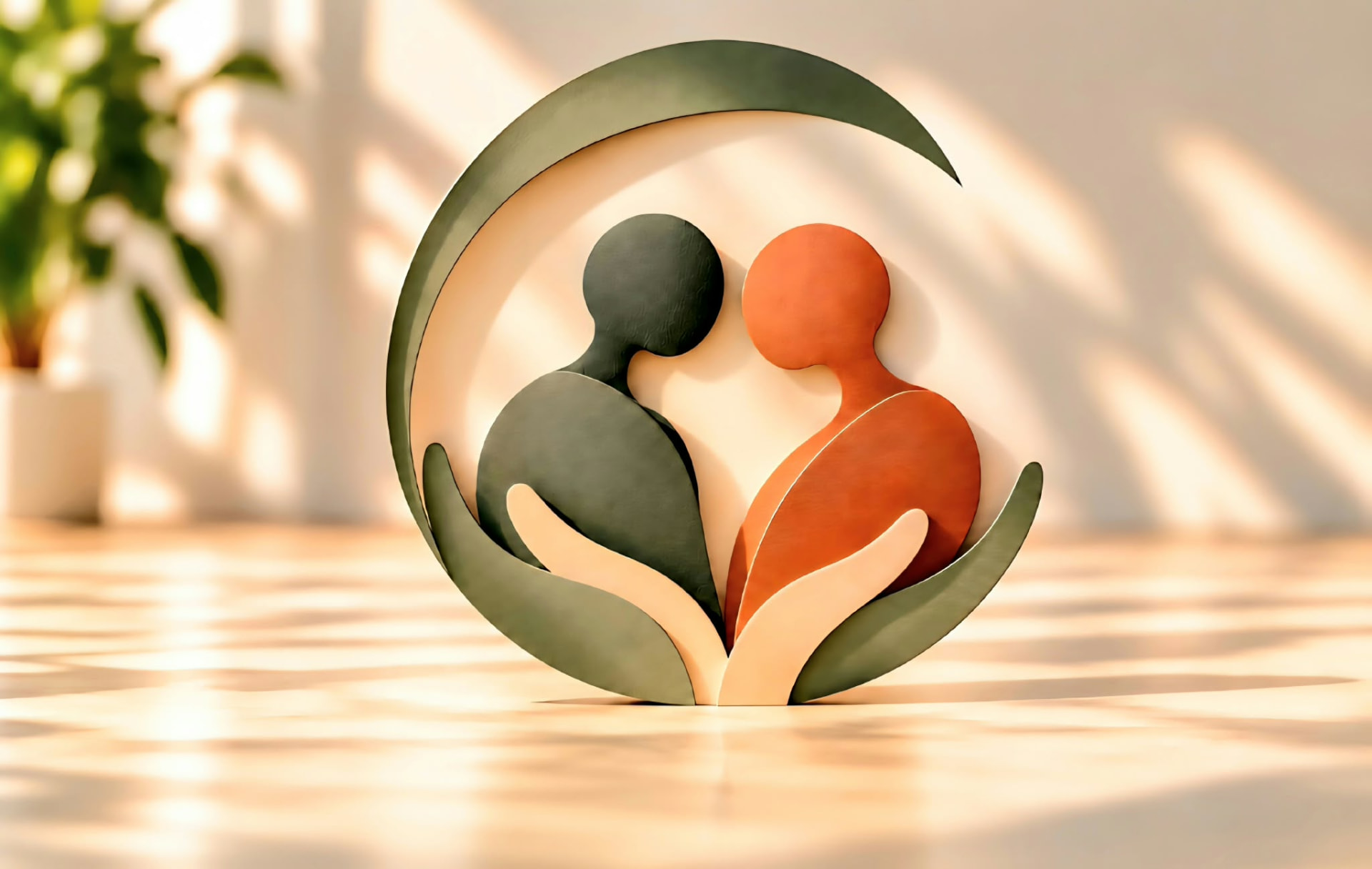
The central question is whether the relationship allows both partners to develop as separate individuals, or whether maintaining it requires continually giving up the self.
What Is Emotional Dependence in a Relationship?
Emotional dependence describes a situation in which a person’s sense of worth, emotional stability or ability to make decisions relies heavily on their partner’s responses and presence.
The person may find it difficult to soothe themselves without external reassurance, fear expressing a different opinion or feel unable to cope alone with everyday situations.
It is important to distinguish emotional dependence from healthy interdependence, in which partners help one another while also maintaining personal abilities, other relationships and space for independent choice.
Emotional dependence is not a clinical diagnosis in itself, and its meaning should be examined within the personal and relationship context.
A question for reflection
Do I turn to my partner for help by choice, or do I feel unable to cope without them?
How Does Personal Identity Become Blurred?
Sometimes the loss of self occurs gradually, almost without being noticed.
At the beginning of a relationship, wanting to spend time together and consider the other person’s preferences may be a natural part of falling in love. Over time, however, a person may begin giving up hobbies, reducing social connections or changing opinions to adapt to their partner. In some cases, these compromises stem from fear of conflict or rejection. In other cases, they are related to difficulty identifying personal wishes that do not depend on the relationship.
When adapting to the other person becomes a constant habit, a feeling that personal identity is becoming blurred may develop.
A question for reflection
Which interests, relationships or wishes that were meaningful to me in the past have been pushed aside since the relationship began?
How Is Emotional Dependence Related to Attachment Patterns?
Early experiences of relationships may influence how a person experiences closeness, separateness and emotional security in adulthood.
Someone who grew up in an environment where love was experienced as conditional, or where they needed to adapt to the other person’s needs to maintain the relationship, may develop heightened sensitivity to approval and rejection. Later in life, these patterns may appear as difficulty setting boundaries or a tendency to prioritize the partner’s needs over personal needs.
However, not all emotional dependence originates in childhood. Life crises, previous relationship experiences or periods of personal vulnerability may also increase reliance on the relationship.
A question for reflection
Have I learned throughout my life that, to be loved, I must adapt myself to other people’s expectations?
When My Partner’s Emotional State Runs My Day
One expression of emotional dependence is difficulty separating the partner’s emotions from one’s own sense of stability. For example, when the partner is sad, angry or distant, the person may feel they must immediately fix the situation, even when they are not responsible for it. This may lead to ongoing vigilance: trying to identify changes in mood, avoiding sensitive subjects or adapting behavior to maintain a calm atmosphere. Empathy and caring are important elements of a relationship, but they do not require taking full responsibility for the other person’s emotions.
A question for reflection
Can I remain emotionally stable even when my partner experiences anger, sadness or dissatisfaction?
Does Emotional Dependence Always Occur in Both Partners?
Not necessarily. Sometimes one partner relies more heavily on the other, while the other takes on the role of soothing, guiding or making decisions.
This pattern may create an imbalance: one feels unable to act without support, and the other experiences increased responsibility for their well-being.
Sometimes both partners participate in maintaining the pattern, even without conscious intention. For example, when one struggles to make decisions and the other rushes to decide for them.
It is also important to distinguish emotional dependence from situations of control or coercion, in which a partner actively restricts the other’s independence. These situations require attention to safety, not only to relationship patterns.
A question for reflection
Does the division of roles between us encourage both of our independence, or maintain a situation in which one depends on the other?
How Do We Set Boundaries Without Harming Closeness?
People dealing with emotional dependence may experience setting boundaries as a threat to the relationship.
Saying “no,” asking for personal time or expressing a different opinion may evoke guilt and fear of a negative response. However, a personal boundary is not necessarily an expression of distancing. It clarifies what is suitable for the person, what is not and what falls within their responsibility. For example, one might say: “It is important to me to be with you, and at the same time I also want to spend time with my friends,” or “I understand that this is difficult for you, and at the same time I cannot solve this problem for you.”
The ability to tolerate disagreement without interpreting it as the loss of the relationship is a significant part of building healthy separateness.
A question for reflection
Can I express a personal need even when it does not match my partner’s wishes?
How Do We Strengthen the Sense of Self Within the Relationship?
Strengthening emotional independence does not require distancing from the partner, but broadening personal sources of meaning and security.
One can begin by identifying personal preferences, making small decisions independently and renewing relationships or activities that have been neglected. It is also important to develop the ability to cope with unpleasant emotions without immediately turning to the partner to relieve them.
This process may initially evoke discomfort, especially when the relationship has been based for years on a pattern of increased reliance.
Change occurs gradually, through learning that we can be close and meaningful to one another without being involved in every area of the other person’s life.
A question for reflection
What small decision or action can I take by listening to myself, without needing my partner’s approval?
How Can Couples Counseling Help?
In couples counseling, we examine how patterns of dependence developed, which emotional needs they serve and how they affect the division of responsibility and personal space in the relationship. The process may help partners identify unspoken expectations, improve communication and create a balance between mutual support and independence. When dependence is related to significant difficulties with self-worth, emotional regulation or past experiences, individual therapy may also be included.
The aim is not to reduce the importance of the relationship, but to allow each partner to be present in it with a sense of capability and choice.
A question for reflection
What would we need to change in our relationship dynamic so that each of us can feel both a sense of belonging and independence?
Being Together Without Losing Ourselves
A beneficial relationship does not require two people who do not need one another. On the contrary, the ability to rely on someone close, ask for support and feel a sense of belonging is an essential part of a meaningful relationship. The difference lies in freedom of choice: do we remain in the relationship because we want to, or do we feel that we cannot exist emotionally without it?
Healthy closeness in a relationship does not erase the “I” in favor of the “we,” but allows both to exist side by side.
A question for reflection
Is the person I am within the relationship similar to the person I want to be, or are there parts of myself that I am afraid to bring into the relationship?
This article is intended for information and reflection and is not a substitute for individually tailored professional care.
More Articles on Couples Counseling
- Fear of Abandonment Within a Relationship; How Do Past Experiences Enter the Relationship?Read article
- When Intimacy Fades - What Can Physical Distance Tell Us About the Relationship?Read article
- Differences in Sexual Desire; When the Gap Becomes a Couple’s StruggleRead article
- When Is a Relationship Crisis One We Can Grow From, and When Does the Question of Separation Arise?Read article