
Psychotherapy3 min read
Childhood Wounds in Adult Life; How the Past Continues to Live Within Us
How early experiences may reappear in our self-image, choices and relationships — and how we can begin to encounter them differently.
Read articleHow early experiences may reappear in our self-image, choices and relationships — and how we can begin to encounter them differently.
Read articleA look at the inner voice, comparison with others and the patterns that distance us from a stable sense of worth that does not depend on achievement.
Read articlePeriods of crisis unsettle what is familiar, but can also open up space for understanding, reorganization and building new anchors.
Read articleMoving to another country touches far more than an address: identity, the feeling of home, relationships and the ability to adjust to a new reality.
Read articleThere is not always a need to wait for a crisis. Signs and questions that can help identify when a therapeutic conversation may create a helpful space.
Read article
Anxiety often works as a cycle in which thoughts, emotions and responses reinforce one another. Understanding it is a first step toward change.
Read articleWhat turns a simple decision into an ongoing struggle, and how the need for complete certainty can limit freedom of choice.
Read articleTrying to control every detail may bring brief relief while deepening tension. Flexibility in the face of uncertainty can be developed.
Read articleWhen striving for excellence stops serving us, and how we can build a more flexible relationship with mistakes, achievement and self-worth.
Read article
When guilt runs the parenting, boundaries become blurred. How do feelings of guilt affect our decisions, and how do we return to parenting from choice?
Read articleWe cannot disconnect from screens, but we can build a healthy relationship with them. On boundaries, gaming and phones, without endless power struggles.
Read articleA highly sensitive child may experience the world at high intensity. How do we distinguish high sensitivity from difficulties with emotional regulation, how do we make room for emotion without letting it run the home, and how do we help a child turn sensitivity into a strength?
Read articleSometimes something entirely different lies behind the ‘not listening’.
Read articleHow do we create trust in which a child feels safe to share, maintains their privacy, and develops independence, without giving up our parental responsibility to protect them?
Read article
When two parents view raising children differently, the children may find themselves between two opposing positions. How can a parental partnership be built even when the parents do not agree on everything?
Read articleWhen one family member goes through a crisis, the whole family may be affected. How does the family system respond to change, and what can help household members go through this period together?
Read articleWhen a parent–child relationship becomes filled with anger, disappointment and recurring arguments, it sometimes seems that the closeness they once shared is fading. Yet even a relationship that has worn down can change. How can we acknowledge hurt, take responsibility and rebuild trust?
Read articleA family is a space of belonging, love and support, but also a system in which different personal needs, wishes and boundaries meet.
Read articleSeparation ends the couple’s relationship, but it does not end their shared parental responsibility. How do we cope with the change in the family, preserve the children’s sense of security and build co-parenting even after the couple’s relationship has ended?
Read article
Why do everyday situations trigger such strong emotional responses? How do early experiences influence our relationships, and how can we develop a sense of security that does not depend on constant reassurance from our partner?
Read articleSometimes intimacy in a relationship does not disappear all at once. It gradually recedes. Hugs become rarer, spontaneous touch decreases, and closeness that once felt natural begins to feel forced or distant.
Read articleHow can we talk about different sexual needs without creating feelings of rejection, pressure or guilt?
Read articleAlmost every long-term relationship encounters periods of difficulty. Sometimes a crisis arises following a significant event, and sometimes it is the result of disappointments, differences and distance that have accumulated over the years.
Read article“I don’t know what I would do without him,” “When she is unhappy with me, my whole day is ruined,” “I no longer remember what I really want.”
Read article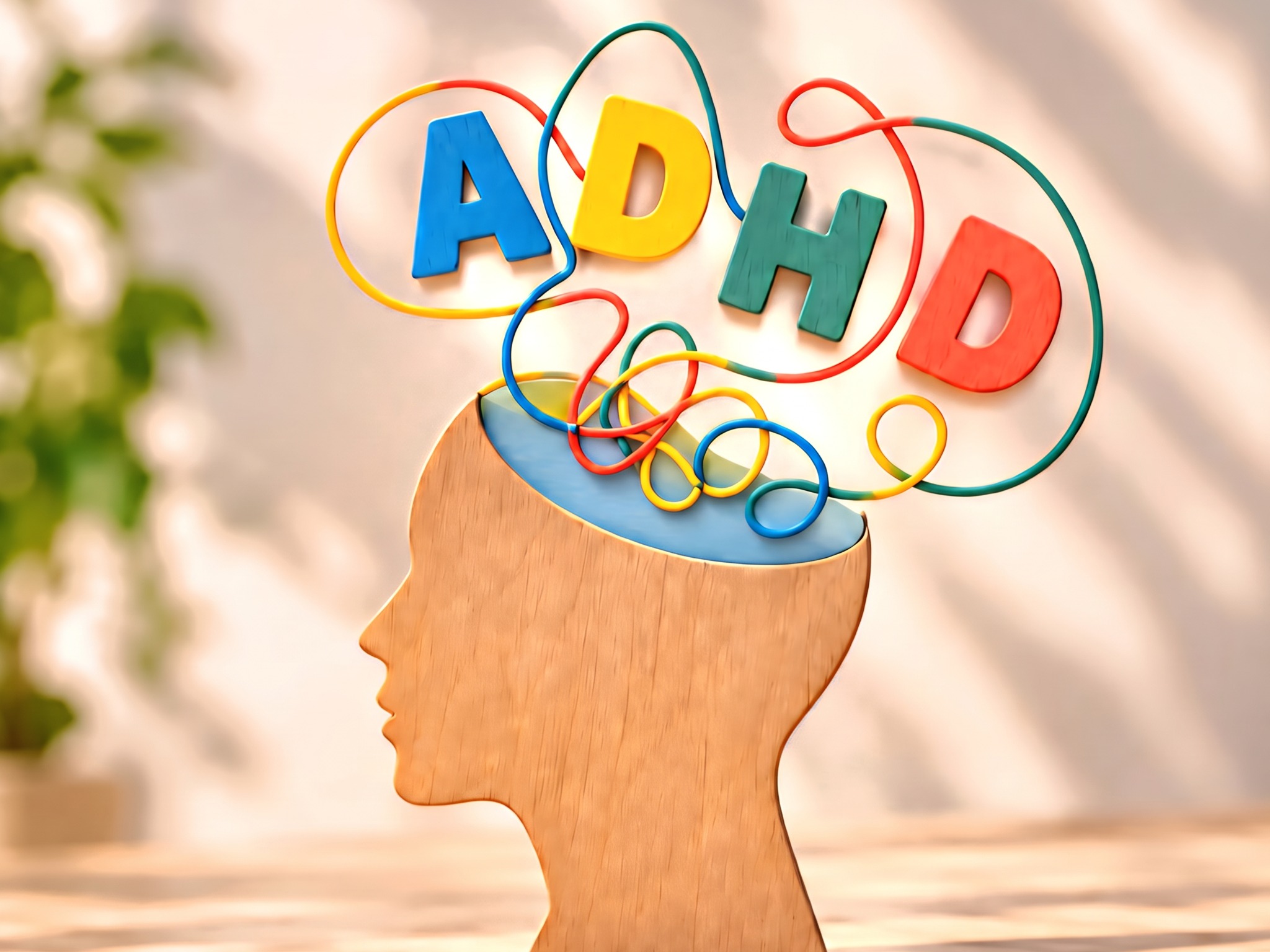
"All my life I was told I was scattered", "I always did well at school, but I had to work harder than everyone else", "Only when I became a mother did I realize how hard it was to manage all the tasks".
Read article"He is no longer the child he used to be", "She used to share everything with me, and now every conversation ends in an argument", "He is mature enough to take responsibility, so why do I still have to remind him of everything?"
Read article"If he can play on the computer for hours, how can he not concentrate in class?", "She keeps putting things off until the last minute", "I know exactly what I need to do, but I just can't get started".
Read articleA child who struggles to concentrate in class, an adult who forgets tasks, a teenage girl who finds it difficult to sit still, or someone who reacts impulsively. These behaviors may raise suspicion of attention-deficit/hyperactivity disorder (ADHD), but they can also occur in anxiety and in trauma-related reactions.
Read article"He can sit at the computer for hours, but he cannot manage ten minutes of homework", "When he wants something, he knows how to make an effort", "She is a very intelligent girl; she simply does not use her abilities".
Read article"Just saying no is enough to make him explode", "She can go from laughter to tears within seconds", "After the outburst he regrets it, but next time it all happens again".
Read articleMoving to another country is a significant change in a child’s life. A new language, an unfamiliar school, friends left behind, a different culture, and sometimes a sense of losing what is familiar and safe.
Read article"The teacher says he is not focused, but at home he can sit at the computer for hours", "I feel that I have to work much harder than others to stay focused", "How can we know whether attention-deficit/hyperactivity disorder is really present?"
Read article
Moving to another country brings many changes: a new language, a different education system, an unfamiliar social environment and sometimes distance from the healthcare and diagnostic services the family knew. When a child begins to show difficulties with concentration, organization or learning, parents may wonder: is this attention-deficit/hyperactivity disorder (ADHD), an adjustment difficulty or the effect of learning in a foreign language?
Read articleTwo children take a computerized attention test and receive similar results. One succeeds at school but struggles to manage the morning routine, while the other gets organized independently but struggles to participate in group activities.
Read articleA child who struggles to listen in class, a teenager who forgets tasks and an adult who feels that their thoughts are scattered in every direction. Sometimes the picture resembles attention-deficit/hyperactivity disorder (ADHD), but another factor may underlie the difficulties: insufficient sleep.
Read article“I read the same page over and over and cannot remember what I read,” “My child is suddenly struggling to concentrate at school,” “I used to be able to do several tasks at once, and now I forget simple things.”
Read articleA child who stares during a lesson and does not respond when spoken to. A teenage girl who struggles to remember a conversation that took place a short time ago. An adult who loses their train of thought and struggles to complete simple tasks.
Read articleA girl who struggles to concentrate during a test, a teenager who loses the thread of a conversation, an adult who puts off tasks again and again. Is this attention-deficit/hyperactivity disorder (ADHD), anxiety, or perhaps a combination of the two?
Read article
DBT Treatment for Adolescents and Parent Guidance
Read articleUnderstanding What Lies Behind the Behavior
Read article"I am afraid they will leave me, but sometimes I am actually the one who pushes people away", "One moment I feel close and loved, and the next I am certain that no one cares about me", "I know that my reactions hurt me, but in that moment it is difficult for me to stop".
Read articleA child is angry because they did not get what they wanted and shouts at their parents. A partner is hurt by a comment made without bad intent and responds with accusations. An adolescent feels unheard and slams their bedroom door. In situations like these, our natural response is sometimes to focus on the behavior: to explain why it is unjustified, demand that it stop or try to persuade the person that there is no reason to feel that way. Yet behind the behavior lies an emotional experience that does not always receive space.
Read articleSomeone makes a small comment and I feel as though I have been attacked. Someone close to me does not reply to a message, and my thoughts immediately turn to the possibility that they are angry or pulling away. A brief argument leaves me upset for hours, even when everyone around me has already moved on.
Read articleHave you ever made a decision in the midst of an emotional storm, only to regret it a few hours later? And conversely, have you ever made a decision that seemed entirely logical, yet felt that it did not suit you?
Read article
Can a person who has lived for years with negative thinking patterns learn to think differently? Is it possible to change automatic responses that have become part of our everyday behavior? And does the brain continue to change in older age?
Read articleSometimes a person understands very well what causes their distress, knows how to identify their thinking patterns and is even able to explain how they would like to respond differently. And yet, in the moment of truth, the body tenses, the heart races and the familiar reaction returns.
Read articleWhy do some people respond to threatening situations with anger and confrontation, others feel the need to run away, and some freeze in place and cannot respond?
Read articleA child is late coming home, and the first thought is that something terrible may have happened to them. A manager asks to speak with us, and immediately the fear arises that we are about to lose our job. An unfamiliar physical pain triggers a fear of serious illness.
Read articleWhat happens to the nervous system following a threatening experience?
Read articleA single word, a facial expression or a change in tone of voice can evoke an intense emotional response in us. Sometimes we feel hurt, fear or anger that seems disproportionate to the intensity of the event.
Read articleA child who receives encouragement when trying something new may develop a sense of capability. A child who experiences repeated criticism of their mistakes may begin to believe that failure indicates a lack of worth. A child who grows up in an environment where their feelings are listened to may learn that they are allowed to express difficulty and ask for help.
Read article
Recurring headaches, muscle tension, a choking sensation, stomach aches or ongoing fatigue. Sometimes we look for the explanation of these sensations in the body alone, without taking into account what is happening in our lives emotionally.
Read articleSome people wake up in the morning feeling tired, even after a night of sleep. They find it hard to relax at the end of the workday, feel they must stay in control, and discover that even in quiet moments their thoughts keep dwelling on tasks and worries. Sometimes there is no single unusual event that explains the feeling. It is an accumulation of responsibility, strain, uncertainty and daily demands. When this situation continues over time, the body may pay a price.
Read articleA woman comes for a hands-on treatment and notices that she finds it difficult to relax her shoulders, even when she feels comfortable. Another person becomes tense when someone approaches from behind. Some people experience discomfort during a hug, even though they love the person hugging them.
Read articleA person may understand why they find it difficult to trust others, identify the source of their fear and even know that the people around them are not necessarily dangerous. Yet when closeness develops, they find themselves pulling away. What might help them develop a different way of responding?
Read articlePlease fill in your details and I'll get back to you soon.