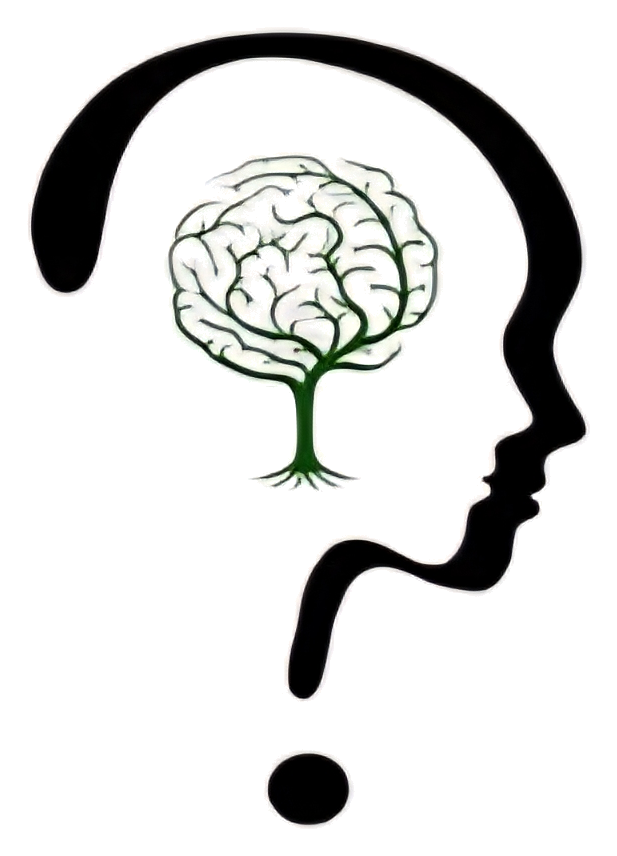
The Brain Code in Childhood; How Do Experiences, Relationships and Messages Shape the Way a Child Perceives Themselves and the World?
A child who receives encouragement when trying something new may develop a sense of capability. A child who experiences repeated criticism of their mistakes may begin to believe that failure indicates a lack of worth. A child who grows up in an environment where their feelings are listened to may learn that they are allowed to express difficulty and ask for help.
How do everyday experiences become perceptions that accompany us into adulthood?
The answer is related to brain development and the brain’s ability to change through experience. Childhood involves significant processes of neural maturation, learning and the organization of brain networks.
The term “the brain code” is not a scientific term describing a fixed program in the brain, but an image for the patterns of learning, expectations and meanings that develop throughout life.
The Developing Brain; Why Is Childhood a Significant Period?
The brain begins to develop even before birth and continues to undergo structural and functional changes throughout childhood, adolescence and adulthood. During childhood, connections form between nerve cells, active connections are strengthened and certain connections are reduced as part of normal development. These processes are influenced by a combination of genetic, biological and environmental factors. Repeated experiences may contribute to the development of skills and patterns of responding, but this does not mean that every experience is permanently imprinted in the brain.
A question for reflection
Which repeated experiences in my childhood may have influenced the way I learned to cope with challenges?
Relationships with Caregivers; The Basis for Expectations of Relationships
In the early years of life, a child depends on the significant adults in their life for protection, care and emotional support.
Through repeated interactions, the child begins to develop expectations about the availability of others and the possibility of turning to them for help. When an adult responds to a child’s needs sensitively and with relative consistency, this may support the development of secure attachment. In contrast, relationships characterized by significant unpredictability, neglect or rejection may make it harder to develop a sense of safety in relationships. At the same time, attachment patterns are not a fixed destiny. Meaningful relationships later in life may influence and change them.
A question for reflection
Is it easy for me to believe that others will be available when I need them, or do I find it difficult to rely on people?
How Do Messages from the Environment Become Beliefs About the Self?
Children learn about themselves not only through successes and failures, but also through the way others treat them. Statements such as “You always cause problems,” “You are too sensitive” or “You cannot be trusted” may influence self-perception when repeated in meaningful contexts. Gradually, core beliefs may develop, such as “I am not good enough,” “I am a burden to others” or “To be loved, I must not make mistakes.” In contrast, messages that refer to a specific behavior rather than the child’s overall identity may help them distinguish between a mistake and their worth as a person.
It is important to remember that the same message may affect different children differently, depending on temperament, age, context and other experiences.
A question for reflection
Which statements I heard in childhood still influence the way I describe myself?
Learning Through Observation - What Does a Child Pick Up Without Being Taught?
Children learn to a large extent by observing the behavior of others. A child who sees an adult deal with a mistake by correcting it and asking for help is exposed to a particular model of problem-solving. A child who repeatedly sees conflicts end in humiliation or a breakdown in contact may develop different expectations about disagreements. This process is called observational learning (Observational Learning). It does not require explicit instruction. Sometimes the behavior a child sees influences them more than the verbal message they hear.
A question for reflection
Which coping patterns of the adults around me did I adopt without consciously choosing them?
How Does a Sense of Capability Develop?
A sense of capability develops not only through praise, but also through experiences in which a child faces a challenge and discovers that they can influence the outcome. When an adult allows a child to try, make mistakes, correct them and try again, they provide opportunities for independent learning. In contrast, when an adult rushes to solve every difficulty for a child, the child may have fewer opportunities to experience their own abilities. Demands that are not suited to the child’s age or abilities may also undermine their sense of capability.
The important balance is between support and gradually allowing independence.
A question for reflection
Was I encouraged to cope with challenges in childhood, or did I learn to fear mistakes and avoid them?
Do Difficult Childhood Experiences Change Brain Development?
Prolonged exposure to significant stress, especially without sufficient support from an adult, may affect biological systems involved in the stress response and aspects of emotional and cognitive development. At the same time, the impact is not uniform and cannot be predicted on the basis of a single event. The duration and intensity of exposure, the child’s age, their individual characteristics and the presence of protective factors all matter. A stable relationship with a supportive adult, a safe environment and appropriately tailored support may moderate the effects of difficult experiences. Therefore, a particular childhood experience should not automatically be taken to imply brain damage or future psychological difficulty.
A question for reflection
Which people or settings gave me a sense of stability during challenging periods in my childhood?
Can Beliefs Formed in Childhood Be Changed in Adulthood?
One of the important implications of neuroplasticity is that development and learning do not end in childhood.
A person who grew up believing that they must please others to be loved can, through new experiences and relationships, develop a different perception of their place in relationships.
In therapy, early beliefs can be identified, their relevance to present reality examined and the behaviors that maintain them addressed. The process may include cognitive work, emotional processing and interpersonal experiences that allow new learning.
There is no need to erase childhood memories in order to change the meaning attributed to them.
A question for reflection
Which belief about myself, which seemed self-evident to me for years, would I like to reexamine?
Childhood Has an Influence, but Does Not Determine the Entire Life Story
Childhood experiences help shape the way we perceive ourselves, interpret relationships and cope with the world. However, human development is not the result of childhood alone. Temperament, heredity, later relationships, life circumstances and new experiences continue to influence us.
Neuroplasticity allows us to understand childhood as a significant period of learning, but not as a period in which all our future possibilities are determined.
Acknowledging the influence of the past can help us understand ourselves, while the ability to keep learning allows us to gradually develop new ways of thinking, relating and coping.
A question for reflection
Which perceptions I learned about myself in childhood still serve me, and which no longer reflect the person I am today?
This article is intended for information and reflection and is not a substitute for individually tailored professional care.
More Articles on Flexible Brain Medicine
- The Flexible Brain: Its Capacity to Change, Learn and Form New PatternsRead article
- Body, Emotion and Brain; Why Does Meaningful Therapeutic Change Sometimes Require Work Through Several Channels at Once?Read article
- Fight, Flight, Freeze; The Survival Responses of the Body and BrainRead article
- Catastrophizing; Why Do We Immediately Imagine the Worst-Case Scenario?Read article
- Trauma and the Brain Code; When the Brain Continues to Detect Danger Even After the Event Has EndedRead article
- Triggers and Neuroplasticity; Why Can Something Small in the Present Evoke a Strong Reaction from the Past?Read article