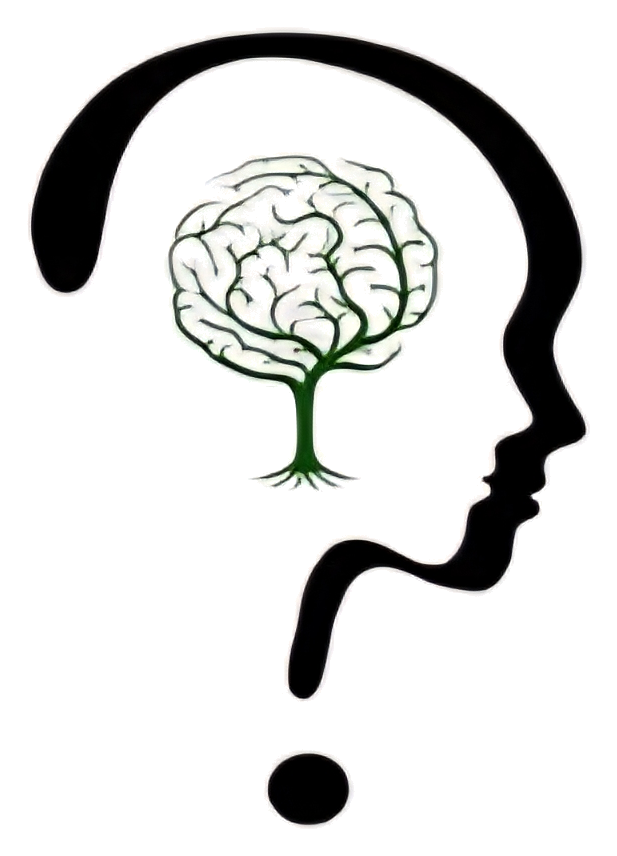
Trauma and the Brain Code; When the Brain Continues to Detect Danger Even After the Event Has Ended
What happens to the nervous system following a threatening experience?
The event ended long ago, yet a certain sound still triggers alarm. A familiar smell brings back a feeling of fear, and meeting someone who resembles a figure from the past causes a sense of unease that is hard to explain.
Sometimes a person knows very well that they are in a safe place, yet their emotional experience does not match this knowledge.
Why does this happen?
Threatening experiences may affect the way the brain learns to detect danger, processes memories and responds to stimuli that are reminiscent of the event.
The term "the brain code" is used here as an image for the patterns of learning and memory that form following a threatening experience. It does not refer to a single or fixed neural code, but to complex processes involving brain networks and bodily systems.
How Does a Threatening Experience Become an Emotional Memory?
When a person is exposed to a threatening event, the brain processes information about what happened and the conditions in which it happened. During this process, learned associations may form between the danger and details that were present during the event, such as a place, a sound, a smell or a facial expression. This process is called fear conditioning (Fear Conditioning). For example, a person who experienced a car accident may develop a fear response when hearing screeching brakes, even if there is no danger around them.
The response does not require a conscious recollection of the accident. Sometimes a stimulus that recalls part of the experience is enough to trigger it.
A question for reflection
Are there sounds, places or situations that trigger a strong emotional reaction in me without my immediately understanding why?
What Is the Role of the Amygdala and the Hippocampus?
Two central brain structures involved in emotional learning and memory are the amygdala and the hippocampus.
- The amygdala takes part in processing the emotional meaning of stimuli, in threat-related learning and in defensive responses.
- The hippocampus is involved in forming memories and in understanding the context in which an event occurred, including the place, time and circumstances.
Following trauma, some people may show changes in the functioning of the networks involved in these processes. As a result, a stimulus that recalls the event may trigger fear even when the current context is completely different.
It is important to emphasize that this is not necessarily permanent brain damage, and not everyone who experiences trauma shows the same changes.
A question for reflection
Are there situations in which I know that circumstances have changed, yet I still react as if I were in the earlier experience?
Why Might a Traumatic Memory Feel as if It Is Happening Now?
Traumatic memories may be accompanied by intense sensory and emotional experiences. Some people experience intrusive memories, involuntary images or a sense of returning to the event. In certain situations a flashback occurs, in which the person feels as if the event is happening again, with varying degrees of disconnection from the present. At the same time, not every traumatic memory is fragmented or disorganized, and not everyone who experiences trauma suffers from flashbacks. The way memories are stored and retrieved is influenced by many factors, including the characteristics of the event, the emotional state and the circumstances of recall.
A question for reflection
Does a particular memory make me feel that I am remembering the past, or that for a moment I am reliving it?
Fear Generalization; When the Threat Spreads to Other Situations
One of the processes that may occur after a threatening experience is called fear generalization (Fear Generalization).
This is a state in which a fear response learned in a particular context also appears in response to similar stimuli. For example, a person who was assaulted in a dark place may begin to fear not only the place where the event occurred, but also other dark streets. In some cases, the fear may gradually extend to further situations.
This process may explain why the world of a person coping with trauma sometimes becomes narrower, even when they are trying to avoid only situations that remind them of the event.
A question for reflection
Has a fear that began after a particular experience spread over time to situations that were not part of it?
What Happens to the Nervous System After Trauma?
In some people, a traumatic experience may be followed by lasting changes in the reactivity of systems involved in stress. These changes can be expressed as heightened alertness, sleep disturbances, sensitivity to stimuli or difficulty calming down after a stressful event. Others may experience feelings of detachment, emotional numbness or reduced engagement with their surroundings. The responses are not uniform, and they may change over time.
It is important to distinguish between temporary stress reactions, which may appear after a difficult event, and post-traumatic stress disorder (PTSD), which is diagnosed according to defined clinical criteria.
A question for reflection
Since a difficult experience, have I noticed lasting changes in my sleep, my alertness or my ability to feel at ease?
How Does the Brain Relearn to Distinguish Between Past and Present?
One of the important processes in recovery from trauma is extinction learning (Extinction Learning). Despite its name, it does not mean erasing the original memory.
In this process, new learning takes place, through which the person discovers that stimuli once associated with danger are not necessarily dangerous in the present. For example, a person injured in a car accident may gradually learn, through tailored and safe experiences, to return to driving without every journey triggering a sense of extreme danger.
The new learning does not necessarily erase the earlier fear response, but it may reduce its influence.
A question for reflection
Is there an experience from the past that affects the way I assess my safety in the present?
How Does Trauma-Focused Therapy Help?
Trauma therapy may include evidence-based interventions, such as trauma-focused cognitive behavioral therapy and EMDR.
Therapy is tailored to the nature of the difficulty, the level of distress and the person's individual needs. During therapy, it is possible to work on processing the traumatic memory, examining beliefs that developed following the event and reducing avoidance that limits functioning.
In suitable cases, the process helps the person develop a clearer distinction between the danger that existed in the past and the present reality.
It is not necessary to remember every detail of the event in order to benefit from therapy, and there is no place for uncontrolled exposure to traumatic memories without professional tailoring.
A question for reflection
Which areas of my life are still affected by an experience that has ended, and in which would I like to restore a sense of choice?
The Memory Remains, but Its Meaning Can Change
A traumatic experience may leave a lasting effect on the way a person interprets situations, responds to stimuli and experiences safety. At the same time, this effect is not necessarily permanent.
Through learning processes, new experiences and tailored therapy, it is sometimes possible to reduce the intensity of responses and improve functioning and quality of life.
Recovery from trauma does not require forgetting what happened. It may be expressed in the memory remaining part of one's life story without continuing to determine, with the same intensity, how the person feels and acts in the present.
A question for reflection
What would my life look like if I could remember what I went through without feeling that I am still living inside that same experience?
This article is intended for information and reflection and is not a substitute for individually tailored professional care.
More Articles on Flexible Brain Medicine
- The Flexible Brain: Its Capacity to Change, Learn and Form New PatternsRead article
- Body, Emotion and Brain; Why Does Meaningful Therapeutic Change Sometimes Require Work Through Several Channels at Once?Read article
- Fight, Flight, Freeze; The Survival Responses of the Body and BrainRead article
- Catastrophizing; Why Do We Immediately Imagine the Worst-Case Scenario?Read article
- Triggers and Neuroplasticity; Why Can Something Small in the Present Evoke a Strong Reaction from the Past?Read article
- The Brain Code in Childhood; How Do Experiences, Relationships and Messages Shape the Way a Child Perceives Themselves and the World?Read article