The Anxiety Cycle; How Do Thoughts, Emotions, and Behavior Feed One Another?
Anxiety often works as a cycle in which thoughts, emotions and responses reinforce one another. Understanding it is a first step toward change.
Anxiety is a natural response of the body and mind to situations perceived as threatening. It is intended to protect us and prepare us to cope with potential danger. Sometimes our warning system is activated even in situations where there is no actual danger, or when the level of threat is lower than what we experience.
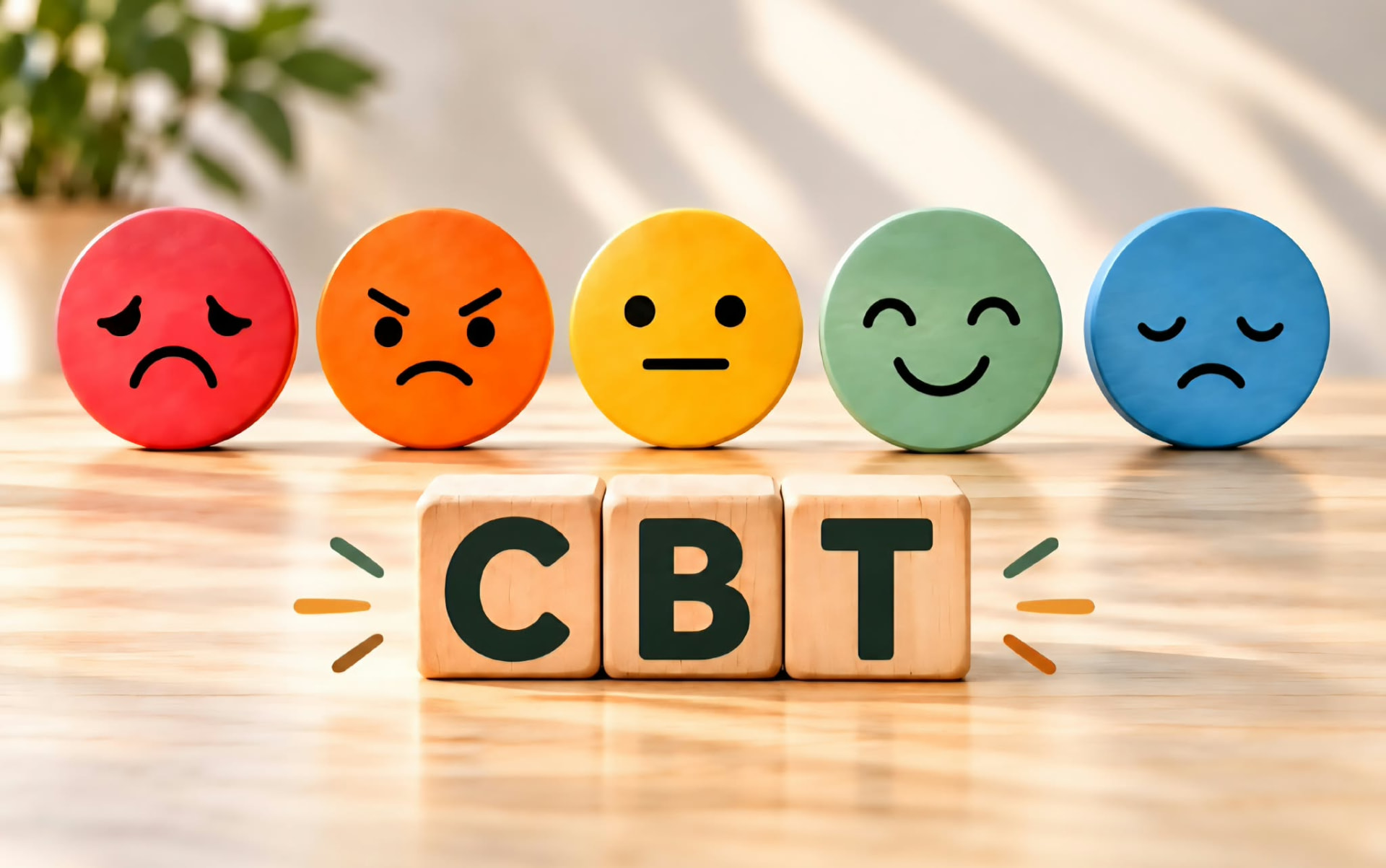
One of the central principles of cognitive-behavioral therapy (CBT) is the understanding that thoughts, emotions, bodily sensations, and behaviors influence one another. When a chain reaction develops between them, anxiety may persist and even intensify. Understanding this cycle is an important step toward change.
How does the anxiety cycle begin?
Imagine someone about to present an idea at a work meeting. Before they have even begun speaking, a thought crosses their mind: "I am sure I will get confused, and everyone will think I am unprofessional."
The thought evokes fear and tension. Their heart begins to beat rapidly, their breathing changes, and their muscles tighten.
They interpret these bodily sensations as a sign that they are about to lose control, and their anxiety increases. Eventually, they decide to avoid giving the presentation.
In the short term, they feel relief, but in the long term, avoidance may reinforce the belief that the situation really is dangerous and that they are unable to cope with it.
This creates a cycle in which each element influences the others and maintains anxiety.
A question for reflection
Do I recognize situations in which a thought about what might happen evokes anxiety even before the event has occurred?
Our thoughts; is every thought a fact?
When we are anxious, we sometimes tend to interpret situations in ways that emphasize danger, failure, or a lack of control.
Thoughts such as "Something bad is definitely going to happen," "I will not be able to cope," or "Everyone will notice that I am nervous" may appear so quickly that we treat them as facts.
In CBT, these thoughts are sometimes called automatic thoughts. They are not necessarily incorrect, but it is important to examine how far they are based on evidence and how far they are influenced by anxiety.
The aim is not to replace every negative thought with a positive one, but to develop more flexible, realistic, and balanced thinking.
A question for reflection
When I am afraid of something, do I check what I actually know about the situation, or do I treat the scenario I fear as though it has already happened?
When the body goes on alert
Anxiety does not occur only in our thoughts. It also activates the autonomic nervous system, which prepares the body to cope with a threat. As a result, a rapid heartbeat, sweating, trembling, muscle tension, a choking sensation, or abdominal discomfort may occur.
These are familiar physiological responses of the survival system, but when we interpret them as a sign of danger, they may increase fear.
For example, someone who feels their heart racing may think: "Something is wrong with my heart." The thought increases anxiety, which may cause their heart rate to accelerate even further.
It is important to remember that not every physical symptom stems from anxiety. When new, unusual, or significant symptoms appear, a medical evaluation may also be appropriate.
A question for reflection
How do I interpret my bodily sensations during anxiety, and does this interpretation calm me or increase my fear?
Avoidance; the relief that reinforces anxiety
One of the central mechanisms that maintains anxiety is avoidance.
When a particular situation evokes fear, distancing ourselves from it provides immediate relief. The brain learns that avoidance reduced distress, making us more likely to choose it again. However, when we avoid situations regularly, we do not get the opportunity to discover whether the threatening prediction actually comes true, or whether we can cope even with a sense of discomfort.
Avoidance is not always obvious. It can also take the form of repeated checking, a constant search for approval and reassurance, or a need to control every detail before taking action.
These behaviors may provide a temporary sense of security, but sometimes they maintain our dependence on them.
A question for reflection
Are there things I avoid so that I will not feel anxious, and is this avoidance gradually narrowing my options?
How does CBT help break the anxiety cycle?
Cognitive-behavioral therapy focuses on identifying the connections between thoughts, emotions, bodily sensations, and behaviors.
During therapy, we learn to identify automatic thoughts, examine the interpretations that increase anxiety, and develop more appropriate ways of thinking and coping.
One of the central tools is gradual, planned exposure to situations that evoke fear, when this is appropriate for the type of anxiety and the person's needs.
Through exposure, we can learn to tolerate uncertainty and discomfort, examine threatening predictions, and discover that avoidance is not always necessary in order to cope. In addition, skills for emotional regulation, reducing physiological arousal, and strengthening a sense of capability can be incorporated.
Therapy does not seek to eliminate anxiety completely, but to reduce its influence on behavior and quality of life.
A question for reflection
If anxiety were not dictating my choices, what would I dare to do differently?
Change begins with recognizing the cycle
The anxiety cycle may feel automatic and uncontrollable, but it is not necessarily fixed.
When we learn to recognize the thoughts that arise, the body's responses, and the behaviors that follow them, the possibility of responding differently opens up.
We cannot always choose which thought will appear or when we will feel fear, but we can gradually develop the ability to choose how to relate to a thought and how to act in the presence of anxiety.
Change does not necessarily happen all at once. Sometimes it begins with a small step in which we choose not to avoid, even while the feeling of fear is still present.
The aim is not to live without anxiety, but to learn to live without letting anxiety run our lives.
A question for reflection
What small, safe step could I take to face a situation that evokes anxiety, rather than automatically avoiding it?
This article is intended for information and reflection and is not a substitute for individually tailored professional care.