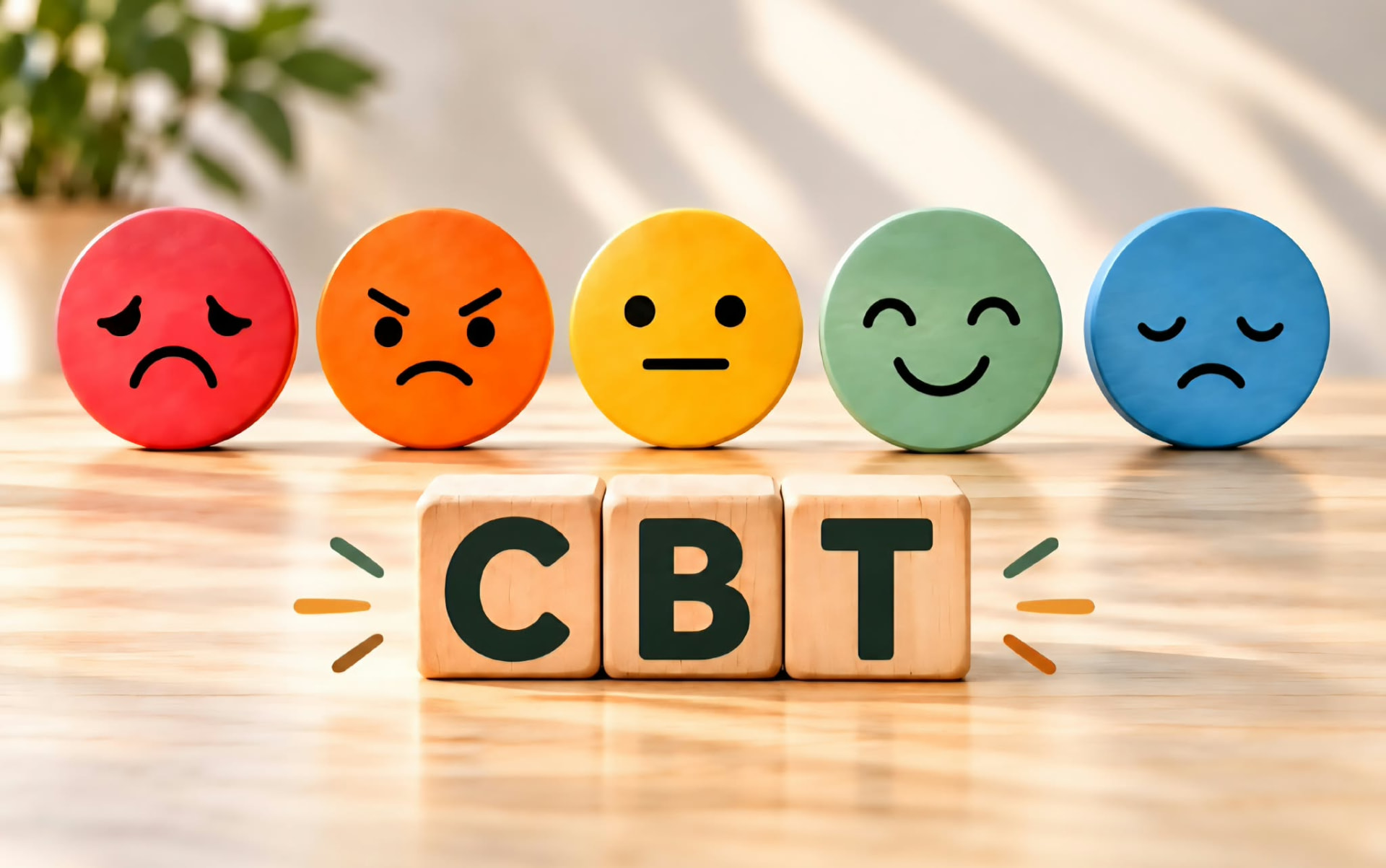
The Need for Control; What Happens When We Struggle to Tolerate Uncertainty?
Trying to control every detail may bring brief relief while deepening tension. Flexibility in the face of uncertainty can be developed.
The need for control is a natural part of the human experience. Knowing that we are able to influence our lives, plan for the future, and make decisions gives us a sense of security and stability. However, when the need for control becomes rigid, it can become a source of tension, anxiety, and frustration. Instead of control serving us, we may find ourselves constantly busy trying to prevent mistakes, predict scenarios, and ensure that things happen exactly as we planned.
One of the central challenges is learning to distinguish between control that helps us manage our lives and an attempt to control things that are inherently beyond our control.
Why do we need a sense of control?
A sense of control is connected to a basic need for security, stability, and the ability to anticipate what is happening around us.
When reality is perceived as predictable, we can plan, act, and feel that we have an influence on outcomes. In contrast, situations of uncertainty may evoke a sense of vulnerability. For some people, this feeling is accompanied by significant tension and a need to quickly restore the security that was lost.
Sometimes an intensified need for control is related to life experiences in which reality was unpredictable, or to situations in which a person learned that they had to be alert and responsible in order to feel protected. At the same time, not every need for control stems from past experiences. Personality traits, patterns of thinking, and life circumstances can also influence the way we cope with uncertainty.
A question for reflection
What arises in me when things do not go as I planned; fear, anger, helplessness, or a feeling that I must regain control?
When the mind interprets uncertainty as danger
One of the central mechanisms related to an intensified need for control is intolerance of uncertainty. This refers to a tendency to experience unclear situations as threatening or as especially difficult to cope with, even when there is no evidence of actual danger. In such situations, the mind may try to fill in the missing information with negative predictions. For example, a person waiting for a medical answer may imagine the most severe scenario, even when there is still no information pointing to it.
Thinking about the negative possibility arouses anxiety, and the anxiety intensifies the need to obtain an immediate answer.
In cognitive-behavioral therapy (CBT), we learn to distinguish between the possibility that something will happen and the likelihood that it actually will, and to identify how our interpretation affects the intensity of our distress.
A question for reflection
When I do not have a clear answer, am I able to wait for more information, or do I tend to fill the uncertainty with threatening scenarios?
Control through behavior; when security becomes dependence
The need for control is not expressed only in our thoughts. Sometimes it leads to behaviors intended to reduce the sense of uncertainty. For example, meticulous planning of every detail, repeated checking, difficulty delegating, excessive preparation for future situations, or trying to make sure that others act in a particular way.
These behaviors can be helpful when they are suited to the circumstances. The difficulty arises when they become a necessary condition for a sense of security. In this way, a person who feels calm only after checking again and again that everything is going according to plan may develop a dependence on checking in order to reduce anxiety.
The immediate relief reinforces the behavior, but it does not necessarily develop the ability to cope with unpredictable situations.
A question for reflection
Are there actions I feel compelled to perform in order to calm down, even when I know they are not always truly necessary?
The emotional price of the need to control
A persistent attempt to control reality demands considerable mental resources. It may be expressed in alertness, emotional exhaustion, difficulty resting, and a constant feeling that there is something that needs to be checked, fixed, or prevented. When reality does not match expectations, frustration, anger, or self-criticism may arise.
The need for control can also affect relationships. A person who finds it hard to trust others may take on too much responsibility, struggle to let go of tasks, or experience tension when people close to them act differently than they expected.
Sometimes the attempt to achieve security through control actually narrows the sense of freedom and flexibility in everyday life.
A question for reflection
In which areas of my life does the attempt to maintain control give me security, and in which areas is it already exacting a price from me?
What is the difference between control and influence?
One of the important distinctions in coping with uncertainty is the difference between the things we can control and those we can only influence.
We can choose how to prepare for an important conversation, but we cannot determine how the person in front of us will respond. We can take care of our health, but we cannot guarantee that we will never fall ill. We can invest in a relationship, but we cannot control the other person's feelings and decisions.
Recognizing the limits of control is not giving up responsibility. On the contrary, it allows us to direct our resources toward actions over which we have real influence.
A question for reflection
Am I investing energy in trying to change things that are beyond my control, instead of focusing on what I can actually do?
How does CBT help reduce the need for control?
In cognitive-behavioral therapy, we examine the beliefs and interpretations that intensify the need for control, alongside the behaviors that maintain it.
The process may include identifying thoughts such as "If I am not in control, something bad will happen" or "I must be prepared for every possibility," and examining the extent to which they match reality.
Through behavioral experiments and gradual practice in coping with uncertainty, it is possible to examine what happens when unnecessary control behaviors are reduced. For example, a person who finds it hard to delegate tasks can practice handing responsibility over to someone else without intervening at every stage of the process.
The aim is not to give up planning, caution, or responsibility, but to develop cognitive and behavioral flexibility and to expand the ability to tolerate situations that are not entirely predictable.
A question for reflection
Which control behavior would I like to reduce, and what am I afraid will happen if I allow myself to do so?
Learning to live with uncertainty
Uncertainty is an inseparable part of life. Even when we plan carefully and act responsibly, we cannot guarantee that everything will happen according to our expectations.
The ability to tolerate uncertainty does not require us to love unpredictable situations or to stop feeling anxious. It develops as we learn to act even without absolute certainty, to adapt ourselves to changes, and to trust in our ability to cope.
Sometimes it is precisely the willingness not to know everything in advance that allows us to be more present in our lives, instead of being endlessly occupied with trying to secure the future.
Inner security does not stem from the ability to control everything that will happen, but also from the knowledge that we can cope with a reality that does not always go according to plan.
A question for reflection
If I allowed myself to let go of the need for control a little, what room would open up in my life for freedom, flexibility, or peace of mind?
This article is intended for information and reflection and is not a substitute for individually tailored professional care.