Difficulty Making Decisions; When the Need to Be 100% Certain Paralyzes Us
What turns a simple decision into an ongoing struggle, and how the need for complete certainty can limit freedom of choice.
We all face decisions throughout our lives. Some are everyday and simple, while others concern relationships, career, family, or significant changes in the future.
For some people, even a decision that seems simple can become a lengthy process accompanied by repeated deliberations, fear of mistakes, and a constant need to make sure the choice will be right.
Sometimes the difficulty does not stem from a lack of information or an inability to decide, but from the need to reach absolute certainty before making a decision. The problem is that in life, 100% certainty is almost never possible.
Why is it so hard for us to make decisions?
Making a decision involves giving up other options and being willing to cope with an outcome that is not known in advance.
When we fear making a mistake, disappointing others, or bearing the consequences of our choice, the decision may be perceived as a threat rather than an opportunity to act.
For some people, the difficulty is related to perfectionism, self-criticism, or a belief that a mistake indicates personal failure. For others, it may be related to anxiety, low self-confidence, or past experiences in which choices were criticized or led to painful outcomes.
It is important to distinguish between natural deliberation before a significant decision and an ongoing pattern of avoiding decisions that impairs functioning or quality of life.
A question for reflection
What frightens me more when I face a decision; the possibility of making a mistake, the reaction of others, or the need to cope with an outcome I cannot predict in advance?
The certainty trap; when we search for a perfect answer
People who struggle to tolerate uncertainty may believe that if they only gather enough information, consult one more person, or check the options again, they will manage to reach a risk-free decision. However, sometimes every answer raises a new question, and every option examined reveals an additional risk. This creates a cycle of information-seeking, repeated checking, and deliberations that do not lead to a resolution.
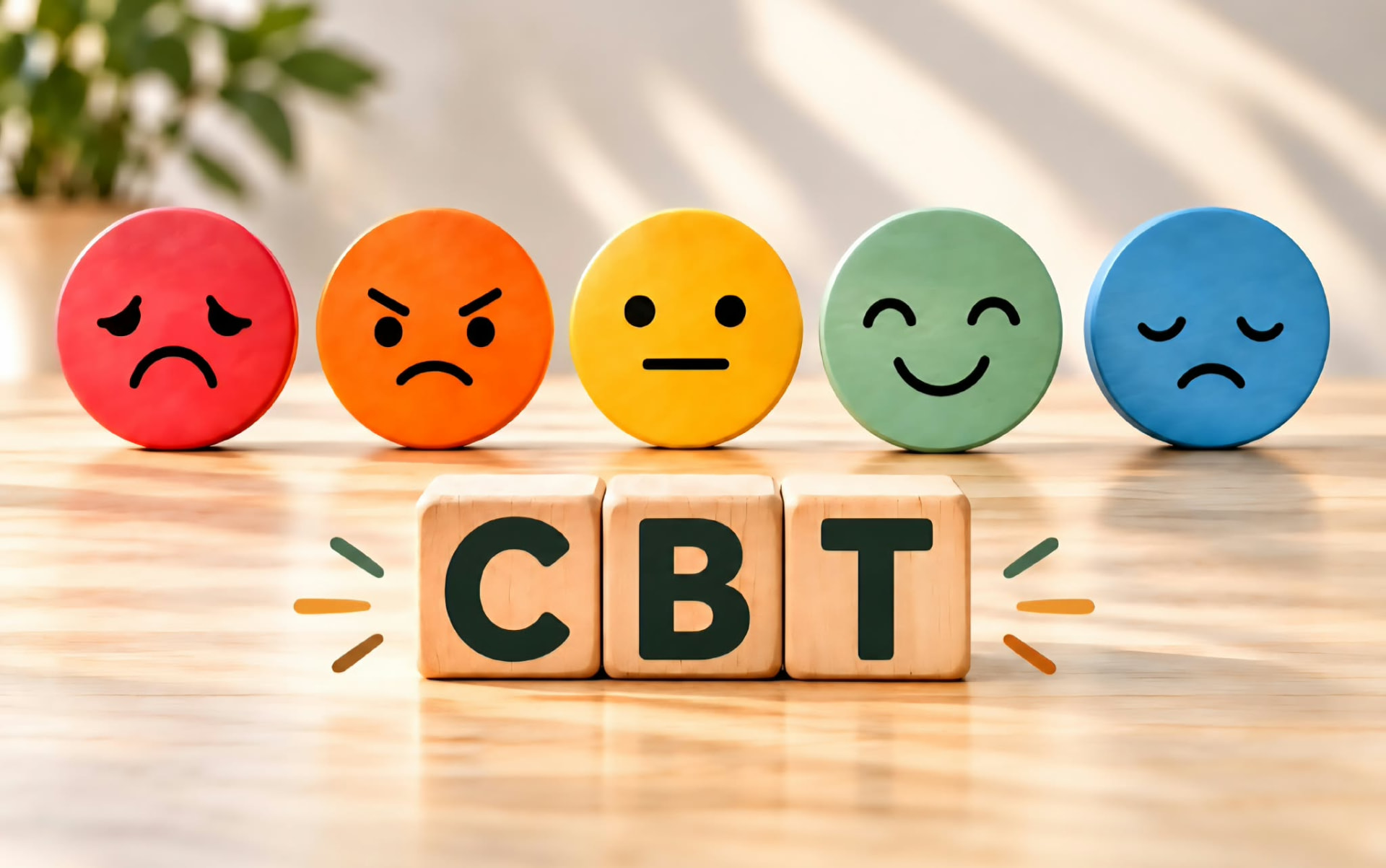
In cognitive-behavioral therapy (CBT), one of the mechanisms addressed is intolerance of uncertainty, which describes difficulty tolerating situations in which the outcome is unknown or not guaranteed.
The more a person tries to achieve absolute certainty, the more they may reinforce the feeling that they are incapable of making a decision without it.
A question for reflection
Do I keep searching for information even when I already have enough data to decide, out of hope of finding an answer that will leave no room for doubt?
Fear of mistakes and perfectionism
Perfectionism is not expressed only in the desire to succeed. Sometimes it includes a belief that there is one right choice and that any other choice will be a mistake.
When a person demands of themselves to always make the best possible decision, even small choices can become a test of ability, responsibility, or self-worth.
Thoughts such as "If I choose wrong, I will ruin everything," "I must be certain," or "I am not allowed to regret" increase the pressure and make decision-making harder.
In CBT, we examine these assumptions and the emotional price they exact.
The aim is not to encourage reckless decisions, but to develop a more flexible approach that recognizes that even a considered decision may lead to an unwanted outcome, without this necessarily indicating failure.
A question for reflection
Do I allow myself to make a good-enough decision, or do I demand of myself to always choose the perfect option?
When deliberation becomes avoidance
Postponing a decision may temporarily reduce the anxiety that accompanies it.
As long as we have not chosen, we are not required to confront the possibility that we made a mistake. But this temporary relief may reinforce the tendency to postpone future decisions as well.
Sometimes we transfer responsibility to others, seek repeated reassurance, or avoid choosing until circumstances decide for us. This can lead to a growing sense of incapability, even though in practice we do not always lack the ability to make decisions.
In addition, it is important to remember that avoiding a choice can also have consequences. Opportunities pass, situations remain unchanged, and sometimes the sense of being stuck deepens.
A question for reflection
Is there a decision I have been postponing for a long time, and what price am I paying for not making it?
How does CBT help cope with difficulty making decisions?
In cognitive-behavioral therapy, we examine the thoughts, beliefs, and behaviors that maintain the difficulty.
The process may include identifying catastrophic thoughts, examining the likelihood and significance of possible outcomes, and working on reducing the need for reassurance and repeated checking.
As needed, decision-making can be practiced gradually, starting with simple choices and progressing to more complex situations.
One of the important principles is learning to distinguish between a decision that requires gathering information and careful judgment, and a situation in which continued checking no longer contributes to the decision but is mainly intended to soothe anxiety.
The therapeutic work also focuses on developing tolerance for uncertainty and strengthening trust in the ability to cope with the outcomes of a choice, even when they do not match expectations.
A question for reflection
What might change if I trusted more in my ability to cope with the outcomes of a decision, instead of trying to guarantee in advance that I will not make a mistake?
How can we start making decisions with greater confidence?
We can begin by practicing a few simple principles:
- Define the decision: Understand exactly what needs to be decided, instead of scattering into many scenarios.
- Distinguish between facts and fears: Identify what is known to us and what is based on predictions or fears.
- Set central criteria: Choose according to values, needs, and relevant information, and not only according to the desire to avoid anxiety.
- Limit repeated checking: When sufficient information has been gathered, examine whether further searching is truly necessary.
- Allow uncertainty: Recognize that there is no way to guarantee all the outcomes of a choice in advance.
In decisions with significant consequences, it is of course important to devote appropriate time, consult professionals when needed, and examine the risks responsibly.
A question for reflection
What small decision can I make this week without checking it again and again, in order to practice trust in my own judgment?
We do not need to be completely certain in order to choose
The ability to make decisions is not measured by always choosing correctly, but also by the ability to exercise judgment, tolerate uncertainty, and cope with the outcomes.
Sometimes it is precisely the attempt to avoid every mistake that prevents us from moving forward, gaining experience, and learning.
The more we develop mental flexibility and reduce our dependence on absolute certainty, the more we are able to act out of choice and not only out of fear.
Confidence in decision-making is not the knowledge that we will never make a mistake, but the trust that we will be able to cope even if things unfold differently than we hoped.
A question for reflection
If I did not need to guarantee myself that the choice would be perfect, what decision would I allow myself to make today?
This article is intended for information and reflection and is not a substitute for individually tailored professional care.