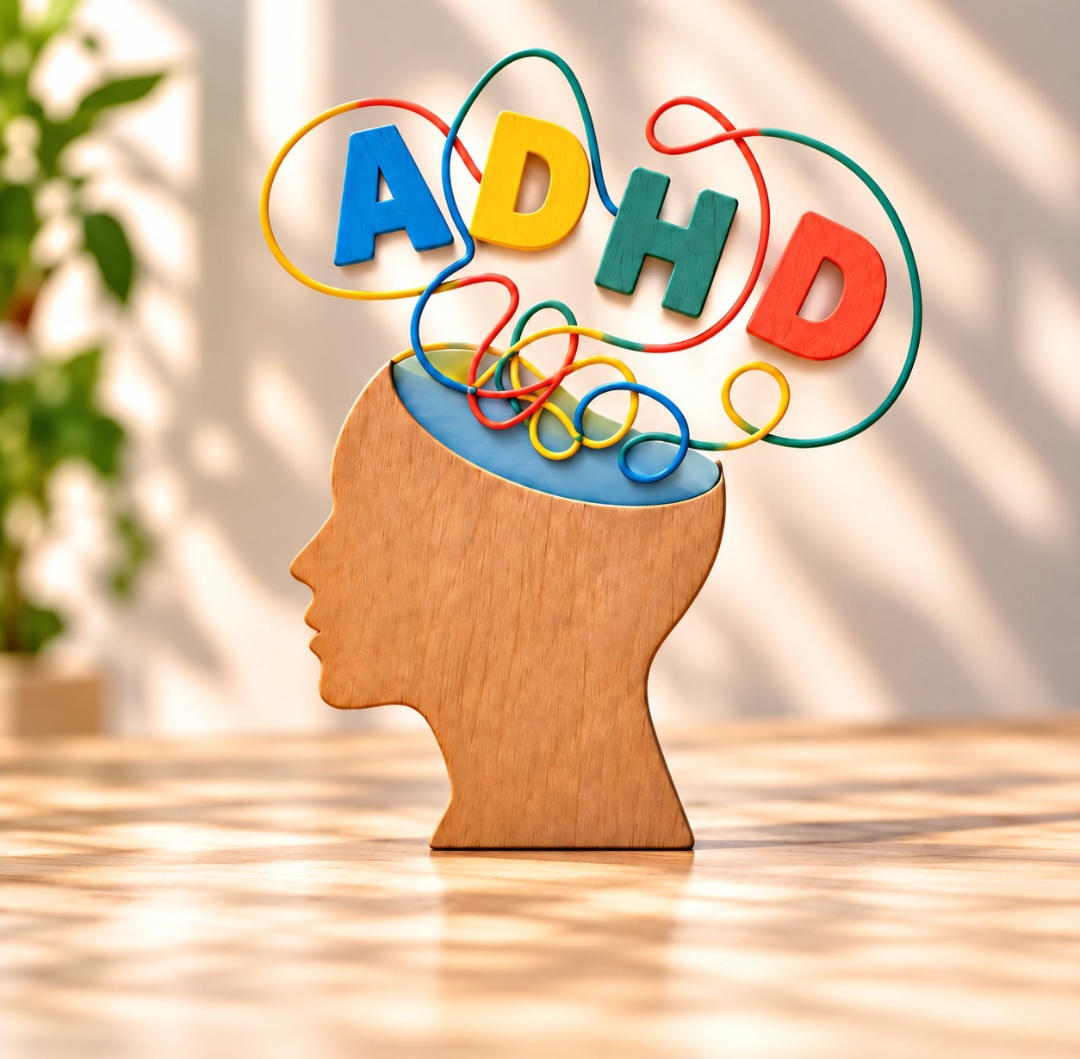
ADHD in Adolescence; When Difficulties Change with Age
"He is no longer the child he used to be", "She used to share everything with me, and now every conversation ends in an argument", "He is mature enough to take responsibility, so why do I still have to remind him of everything?"
Adolescence brings significant changes to the body, brain, emotional world and relationships. When an adolescent also has attention-deficit/hyperactivity disorder (ADHD), developmental changes may affect how the disorder manifests.
Sometimes symptoms that were prominent in childhood become less pronounced, while other difficulties become more significant.
The attention disorder does not necessarily change in its essence, but developmental and environmental demands change, and with them the challenges the adolescent encounters.
The Adolescent Brain; A System Still Developing
During adolescence, the brain continues to mature, especially in regions and systems involved in planning, decision-making, self-control and evaluating consequences. At the same time, changes occur in systems related to reward, motivation and sensitivity to social influence. These processes are part of typical development, but adolescents with ADHD may experience additional difficulties in the functions needed to manage their behavior independently. An adolescent may therefore demonstrate mature thinking in one conversation and, in another situation, make a quick decision without considering its consequences.
A question for reflection
Do I expect the adolescent to demonstrate consistent maturity in every situation, or do I understand that the development of self-control is a gradual process?
When Hyperactivity Changes Form
For some children with ADHD, hyperactivity manifests as noticeable movement: getting up from their chair, running, climbing or difficulty staying in one place.
During adolescence, its outward expression may change. Instead of constant movement, the adolescent may describe a feeling of inner restlessness, a constant need to be occupied or difficulty relaxing. Impulsivity may also take on new forms, for example in rapid responses on social media, unplanned decisions or social behavior.
It is important to distinguish between behaviors typical of adolescence and a persistent pattern that impairs functioning.
A question for reflection
Am I looking for the same signs I knew in childhood, or can I recognize how the difficulties manifest today?
Independence Grows, but Responsibility Grows Faster
In primary school, much of everyday functioning is supported by adults. In middle and high school, the adolescent is required to manage a more complex system of assignments, exams, deadlines and activities. At the same time, parents and teachers expect greater independence.
The gap between demands and executive abilities may manifest as declining achievement, lateness or unfinished tasks. Sometimes an adolescent who succeeded academically for years begins to struggle precisely at this stage, because the external structure that helped in the past has diminished.
A question for reflection
Does the level of independence we expect from the adolescent match the skills they have already acquired?
Friendships, Belonging and Sensitivity to Rejection
During adolescence, the peer group becomes a central source of identity, belonging and self-esteem.
For some adolescents with ADHD, difficulties reading social situations, listening to one another or inhibiting responses may affect relationships. The adolescent may feel misunderstood, be quickly hurt by a remark or react intensely to situations of rejection. However, not every social sensitivity is related to ADHD. The quality of relationships, social experiences and emotional state should also be examined.
A question for reflection
Do I know the adolescent’s social position and sense of belonging, beyond the question of how many friends they have?
Screens, Social Media and the Need for Stimulation
The digital world offers adolescents rapid stimulation, immediate feedback and the ability to move continuously between content. For some adolescents with ADHD, these characteristics may be especially appealing.
Screen use does not cause ADHD, but prolonged use, particularly at night, may affect sleep, time allocation and the ability to make room for other activities.
The parenting challenge is not limited to setting restrictions, but also involves understanding the role the screen plays in the adolescent’s life: social connection, enjoyment, relief from boredom or avoidance of difficulty.
A question for reflection
Do I treat the screen only as a problem, or do I try to understand what need it meets for the adolescent?
Self-Identity; Beyond the Definition of an Attention Disorder
Adolescence is a period in which a sense of personal identity takes shape.
An adolescent diagnosed with ADHD may wonder what the diagnosis means for them, how they differ from others and whether the difficulties will continue into the future. Some adolescents experience the diagnosis as a reassuring explanation for their difficulties, while others may experience it as a label that limits them.
It is important to allow the adolescent to develop a broad identity that includes interests, abilities, values and aspirations, rather than defining themselves only through the disorder.
A question for reflection
Does my adolescent feel that people see who they are, or mainly the difficulties they face?
When the Adolescent Resists Help
During adolescence, a significant need for autonomy and control over personal decisions develops. An adolescent may therefore resist treatment, guidance or support that they previously accepted without difficulty. Such resistance does not necessarily indicate an absence of need for help. Sometimes it expresses a desire to participate in decisions concerning their life. Rather than presenting treatment as something imposed on them, it is important to explain its purpose, listen to their reservations and involve them in choosing goals that are meaningful to them.
A question for reflection
Am I offering the adolescent help in a way that respects their need for independence and choice?
What Changes in the Parental Role?
Parenting an adolescent with ADHD requires a gradual shift from direct management to guidance and collaboration. On the one hand, the adolescent needs space to experiment, make mistakes and develop personal responsibility. On the other hand, they may still need support in certain areas.
The challenge is to distinguish between situations in which it is appropriate to allow independent coping and situations that require parental intervention. A shared conversation about expectations, boundaries and responsibility may help reduce power struggles and strengthen the adolescent’s sense of capability.
A question for reflection
In which areas can I transfer responsibility to the adolescent, and in which areas do they still need my guidance?
When Is Reassessment Advisable?
A diagnosis made in childhood does not mean that every difficulty appearing in adolescence should be explained by ADHD. When there is a significant decline in functioning, new emotional difficulties appear or patterns of behavior change, it is important to examine the current picture. Sometimes the adolescent’s needs must be reassessed, treatment adjusted or coexisting conditions investigated. Such an assessment should also include the adolescent’s own perspective, rather than relying only on adults’ reports.
A question for reflection
Does the support the adolescent receives today still suit their needs, or is it based on the difficulties they had a few years ago?
Seeing Adolescence, Not Only the Disorder
Adolescence is a period of change, exploration of identity and development of independence.
For adolescents with ADHD, the journey may include unique challenges, but also opportunities to develop self-awareness, responsibility and new ways of coping.
The goal is not to continue managing the adolescent as we did in childhood, but to help them understand themselves and gradually develop the tools that will enable them to manage their life.
A question for reflection
Can I see the person my adolescent is becoming, rather than only the child I knew in the past?
This article is intended for information and reflection and is not a substitute for individually tailored professional care.
More Articles on ADHD
- Women and ADHD; Why Might Attention Difficulties Be Identified Late?Read article
- ADHD Is Not Just an Attention Difficulty; What Is Attention-Deficit/Hyperactivity Disorder Really?Read article
- Anxiety or Trauma; Why Can the Symptoms Look Similar to ADHD?Read article
- "He Can When He Wants To": One of the Biggest Myths About Children with ADHDRead article
- ADHD and Anger Outbursts; What Is the Connection Between Attention-Deficit/Hyperactivity Disorder and Emotional Regulation?Read article
- ADHD During Relocation; When Moving to Another Country Meets Difficulties with Organization, Social Life and MotivationRead article
- The MOXO Test; What Does It Measure, What Can We Learn from It, and When Should We Seek a Diagnostic Evaluation?Read article