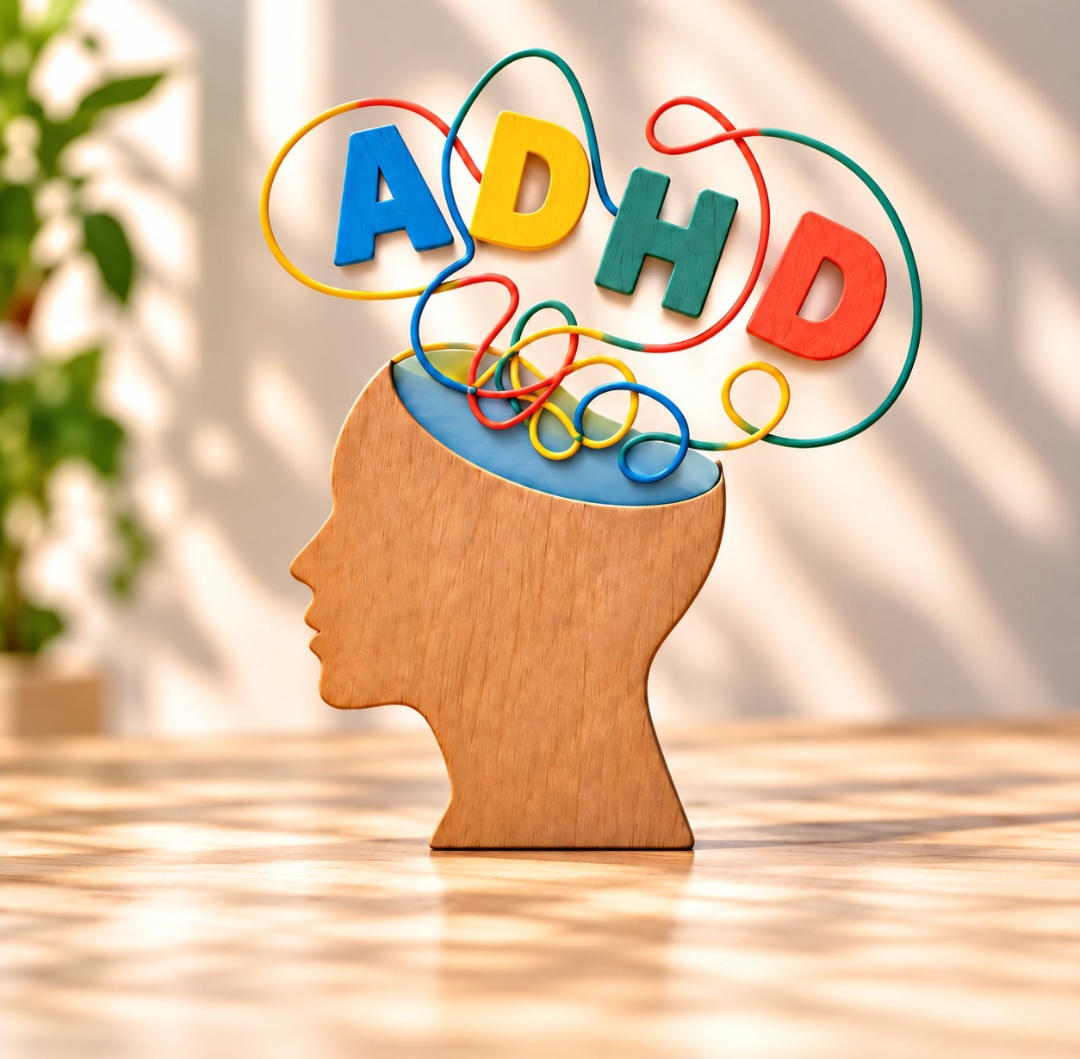
Anxiety or Trauma; Why Can the Symptoms Look Similar to ADHD?
A child who struggles to concentrate in class, an adult who forgets tasks, a teenage girl who finds it difficult to sit still, or someone who reacts impulsively. These behaviors may raise suspicion of attention-deficit/hyperactivity disorder (ADHD), but they can also occur in anxiety and in trauma-related reactions.
From the outside, the symptoms may look almost identical. Inside, however, entirely different mechanisms may be at work.
Not every attention difficulty indicates ADHD, and not all restlessness stems from hyperactivity.
Understanding the source of the symptoms is essential for an accurate diagnosis and choosing appropriate treatment.
Why Can Anxiety Look Like an Attention Disorder?
When someone experiences anxiety, a considerable share of their cognitive resources may be directed toward worries, threatening thoughts and attempts to anticipate possible dangers. As a result, they may struggle to listen, remember information, make decisions or persist with tasks. For example, a student who fears failing an exam may find it difficult to concentrate on the teacher’s explanations, not because they are unable to regulate attention consistently, but because their thoughts are occupied with the possibility of failure. Sometimes the physical restlessness associated with anxiety is also mistakenly interpreted as hyperactivity.
A question for reflection
When I struggle to concentrate, is my attention distracted mainly by external stimuli or by thoughts and worries that occupy my mind?
How Does Trauma Affect Attention and Concentration?
After exposure to a traumatic event, some people develop heightened vigilance and sensitivity to environmental stimuli. In this state, the brain may direct resources toward detecting threats rather than learning, memory or carrying out tasks. A person may react to every small noise, struggle to maintain a train of thought or appear not to be listening. Some people also experience dissociative symptoms, such as a sense of disconnection from their surroundings or their personal experience. In these cases, the person may appear dreamy or detached, in a way that sometimes resembles inattention.
It is important to emphasize that these reactions are not unique to trauma, and dissociation is not equivalent to an attention disorder.
A question for reflection
Does my difficulty staying present increase in situations that evoke a sense of threat, insecurity or emotional overwhelm?
What Does Characterize ADHD?
ADHD is a neurodevelopmental disorder characterized by a persistent pattern of inattention and/or hyperactivity and impulsivity that affects functioning. According to the diagnostic criteria, some symptoms must appear before age 12, be present in more than one life setting and cause significant functional impairment. In contrast, concentration difficulties related to anxiety or trauma may develop or worsen following a particular period, a significant event or a change in emotional state. However, ADHD does not have to be diagnosed in childhood, and it is sometimes identified only in adolescence or adulthood.
A question for reflection
Have attention difficulties been with me since childhood and across different situations, or did they appear following a significant change in my life?
Restlessness and Impulsivity; The Same Behavior, Different Mechanisms
A child who struggles to remain seated may experience a need for movement related to ADHD, but they may also be dealing with physical tension stemming from anxiety. Similarly, a rapid reaction or a verbal outburst may stem from difficulty inhibiting a response, but also from a sense of threat, emotional overwhelm or heightened vigilance. Observing behavior alone is therefore not enough.
It is important to examine what preceded the reaction, the circumstances in which it appears and what the person experiences at that moment.
A question for reflection
When an impulsive reaction appears, is it related to difficulty stopping to think or to a powerful emotional feeling that arises at that moment?
Memory and Executive Functions; Why Can They All Be Affected?
Working memory, planning, organization and decision-making are cognitive processes that may be affected by all three conditions. In ADHD, the difficulties may be related to persistent characteristics of executive functions. In anxiety, worry and mental overload may make it difficult to hold information in working memory. In trauma-related conditions, vigilance, sleep difficulties and intrusive thoughts may reduce the availability of cognitive resources. A complaint such as “I don’t remember anything” therefore calls for an examination of the type of difficulty, the circumstances of its appearance and its impact on functioning, rather than an automatic assumption that it is an attention disorder.
A question for reflection
Do my memory and concentration improve when I am calm and feel safe, or do the difficulties remain similar even in these situations?
Can ADHD, Anxiety and Trauma Coexist?
Absolutely. A person with ADHD may also be dealing with an anxiety disorder or PTSD.
Sometimes ongoing ADHD-related difficulties, such as experiences of failure, criticism and frustration, contribute to the development of anxiety. In other cases, exposure to trauma may worsen attention difficulties that were already present.
When several conditions coexist, it is important to avoid trying to explain all the symptoms through a single diagnosis.
A question for reflection
Could some of my difficulties have been present over the years, while others developed following particular experiences or periods?
How Is a Differential Diagnosis Made?
Differential diagnosis is a professional process that aims to examine which conditions may explain the symptoms and whether more than one diagnosis is present.
A comprehensive assessment includes an examination of developmental history, when the difficulties began, life circumstances, functioning in different settings and emotional state.
For children, it is important to also draw on information from parents and the educational setting. For adults, evidence of difficulties during childhood can be examined.
Questionnaires and computerized assessments, such as MOXO, may add information about attention and performance characteristics, but cannot reliably distinguish between ADHD, anxiety and trauma on their own.
Other factors, such as sleep disorders, depression, learning disabilities and medical conditions, must also be ruled out or identified.
A question for reflection
Did the assessment I underwent address only the visible symptoms, or also my personal history and the possible factors behind them?
Why Does the Distinction Matter When Choosing Treatment?
Treatment that is not tailored to the source of the difficulty may not adequately address the distress.
For ADHD, behavioral interventions, parent guidance, adapted CBT, functional accommodations and medication may be combined as needed.
For anxiety disorders, CBT that includes work on thinking patterns and avoidance is one of the research-supported approaches.
For PTSD, trauma-focused interventions aim to help process the experience and reduce symptoms.
When several disorders coexist, a treatment plan must be tailored to the full range of difficulties, their severity and the person’s individual needs.
A question for reflection
Does the therapeutic intervention address the source of my difficulty, or focus only on improving concentration and behavior?
Seeing Beyond the Symptom
Two people may show a similar difficulty with concentration while dealing with entirely different inner experiences. One struggles to regulate attention, another is occupied with incessant worries, and a third remains constantly vigilant following a traumatic experience.
Professional diagnosis does not stop at asking how a person behaves; it seeks to understand why the difficulty appears, when it arises and what maintains it.
The better we understand the source of the difficulties, the more precisely we can offer intervention and avoid incorrect labeling.
A question for reflection
Am I quick to put a name to the difficulty I see, or do I allow myself to look more deeply at what may lie behind it?
This article is intended for information and reflection and is not a substitute for individually tailored professional care.
More Articles on ADHD
- Women and ADHD; Why Might Attention Difficulties Be Identified Late?Read article
- ADHD in Adolescence; When Difficulties Change with AgeRead article
- ADHD Is Not Just an Attention Difficulty; What Is Attention-Deficit/Hyperactivity Disorder Really?Read article
- "He Can When He Wants To": One of the Biggest Myths About Children with ADHDRead article
- ADHD and Anger Outbursts; What Is the Connection Between Attention-Deficit/Hyperactivity Disorder and Emotional Regulation?Read article
- ADHD During Relocation; When Moving to Another Country Meets Difficulties with Organization, Social Life and MotivationRead article
- The MOXO Test; What Does It Measure, What Can We Learn from It, and When Should We Seek a Diagnostic Evaluation?Read article