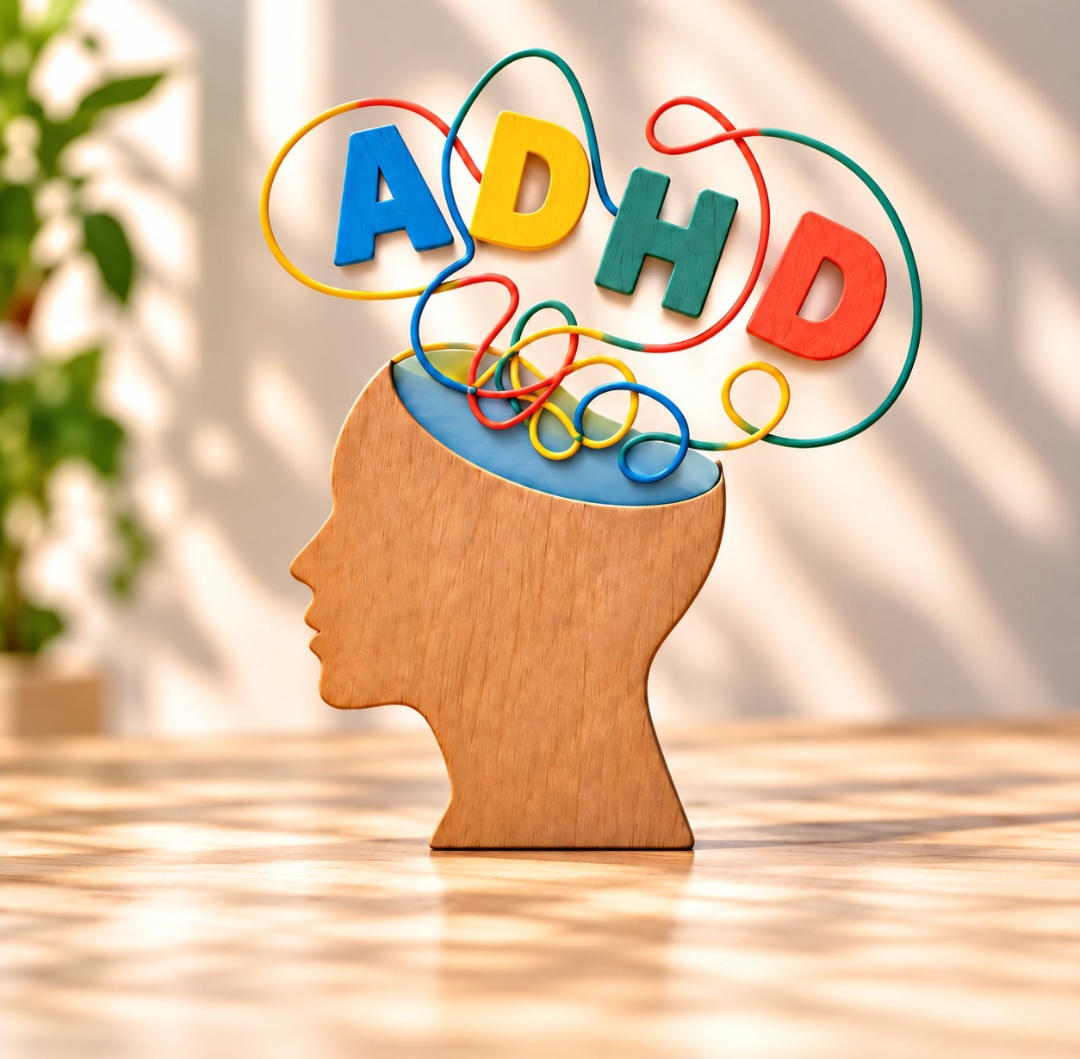
ADHD and Anger Outbursts; What Is the Connection Between Attention-Deficit/Hyperactivity Disorder and Emotional Regulation?
"Just saying no is enough to make him explode", "She can go from laughter to tears within seconds", "After the outburst he regrets it, but next time it all happens again".
Many parents of children with attention-deficit/hyperactivity disorder (ADHD) describe intense emotional responses that sometimes seem disproportionate to the event that triggered them.
An outburst may occur following a simple request, losing a game, a change of plans or a sense of frustration. From the outside, it may be perceived as defiant behavior, but sometimes an underlying difficulty with emotional regulation lies behind it.
Not every child with ADHD experiences anger outbursts, and not every outburst indicates an attention disorder. Understanding the mechanisms behind the behavior makes it possible to respond in a more appropriate way.
What Is Emotional Regulation and How Is It Related to ADHD?
Emotional regulation is the ability to identify emotions, cope with their intensity and adapt the response to the situation.
Some children with ADHD experience difficulties in the processes that help inhibit responses, direct attention and manage behavior during emotional arousal. As a result, a small frustration may trigger a rapid, intense response, and sometimes the child struggles to regain balance even after the event has ended.
Difficulties with emotional regulation are common among children with ADHD, but do not in themselves constitute a core diagnostic criterion of the disorder.
A question for reflection
Does the child struggle to cope with the emotion itself, or mainly to stop the behavioral response it triggers?
Why Does the Response Come So Quickly?
One possible characteristic of ADHD is difficulty with response inhibition, meaning the ability to create a gap between a stimulus and an action.
When the child is frustrated or angry, they may react before having had a chance to consider other ways of coping. For example, a child who loses a game may throw the cards, even though they know the rules and understand that losing is part of the game.
In addition, the effort required throughout the day to organize, listen and control impulses may increase fatigue and frustration. Therefore, an outburst at home is sometimes also related to the strain that has accumulated during the day.
A question for reflection
Do the outbursts occur mainly in situations of frustration, fatigue or after a day that required considerable effort from the child?
Is It Difficulty with Regulation or Oppositional Behavior?
An anger outburst may look like a deliberate refusal to cooperate, but the underlying mechanism is not always the same.
A child who struggles with emotional regulation may lose control of their response even when they do not want a confrontation. In contrast, a persistent pattern of anger, arguments and defiant behavior may warrant an assessment of additional difficulties, including oppositional defiant disorder (ODD).
ADHD and ODD may occur together, but they are not the same disorder. Distinguishing between them requires examining the frequency of the behavior, its duration and the circumstances in which it occurs.
A question for reflection
Do I interpret every instance of resistance as a lack of discipline, or do I try to understand what lies behind the behavior?
Regulation Begins with the Parent
When a child has an outburst, the parent may also experience anger, frustration, helplessness and sometimes a sense of losing control of the situation. In such circumstances, mutual escalation may develop: the child raises their voice, the parent responds intensely, and the tension between them increases.
Children also learn to regulate emotions through co-regulation, a process in which the adult helps the child cope with emotional arousal through a steady presence, a predictable response and appropriate support. This does not mean that the parent must remain calm in every situation, but that they need to develop awareness of their responses and try to regulate themselves before reacting. Sometimes a brief pause, a breath and lowering the voice can prevent escalation.
A regulated parent is not a parent who never gets angry, but a parent who can recognize their anger and choose how to act from within it.
A question for reflection
What happens to me emotionally when the child has an outburst, and how does my response affect the intensity of the event?
How Should We Respond During an Outburst?
During an intense outburst, the child’s ability to listen to explanations and think flexibly may be limited. This is therefore not the time for lengthy educational conversations or an attempt to convince them that their response is excessive.
The first step is to maintain safety, reduce stimuli and speak in short, clear sentences. You can say: "I can see that you are very angry. It is okay to be angry, but it is not okay to hit." In this way, the parent acknowledges the emotion while setting a clear boundary for behavior.
If there is a risk of harm, take immediate protective action and seek appropriate assistance.
A question for reflection
During the outburst, do I try to teach the child a lesson, or first help them return to a state in which they can listen?
What Do We Do After the Child Has Calmed Down?
After emotional arousal subsides, you can revisit the event and examine together what happened. It is important to do this without humiliation or blame, while maintaining responsibility for behavior. You can ask: "What did you feel just before the outburst?", "How did your body feel?" and "What could help you next time?".
At this stage, you can practice identifying early signs of anger, asking for a break, slow breathing or seeking an adult’s help.
If the child hurt someone else, it is important to help them take responsibility and repair the harm in a way appropriate to their age and ability.
A question for reflection
Does the conversation after the outburst focus mainly on what the child did wrong, or also on the skill they need to learn?
When Should We Seek a Professional Assessment?
When outbursts are frequent, intense or impair the child’s functioning and relationships, it is important to seek a professional evaluation.
Not every emotional difficulty should automatically be attributed to ADHD. Anxiety, trauma, sleep difficulties, depression and additional developmental conditions may affect emotional regulation.
A comprehensive assessment makes it possible to identify the factors behind the difficulty and develop a tailored intervention plan, which may include parent guidance, emotional therapy, behavioral interventions and work with the educational setting.
A question for reflection
Have the outbursts become a persistent pattern that affects the child’s quality of life and the family atmosphere?
Do Not Dismiss the Emotion, but Teach How to Cope with It
Anger, frustration and disappointment are natural emotions. The aim is not to prevent the child from experiencing them, but to help them identify their emotions and develop ways of coping that do not harm them or those around them.
When the parent combines self-regulation, empathy, clear boundaries and teaching skills, they help the child gradually develop the capacity for independent regulation.
A question for reflection
What parental response would I like my child to learn from me and be able to use in the future when coping with anger?
Do You Need Professional Guidance?
If your child is experiencing anger outbursts, difficulties with emotional regulation or suspected ADHD, you can contact me for an assessment and parent guidance meeting.
In the process, we will examine the characteristics of the difficulty, the family dynamics and ways of coping that suit the child and their parents.
You are welcome to contact me to arrange a meeting and develop professional support tailored to the family’s needs.
This article is intended for information and reflection and is not a substitute for individually tailored professional care.
More Articles on ADHD
- Women and ADHD; Why Might Attention Difficulties Be Identified Late?Read article
- ADHD in Adolescence; When Difficulties Change with AgeRead article
- ADHD Is Not Just an Attention Difficulty; What Is Attention-Deficit/Hyperactivity Disorder Really?Read article
- Anxiety or Trauma; Why Can the Symptoms Look Similar to ADHD?Read article
- "He Can When He Wants To": One of the Biggest Myths About Children with ADHDRead article
- ADHD During Relocation; When Moving to Another Country Meets Difficulties with Organization, Social Life and MotivationRead article
- The MOXO Test; What Does It Measure, What Can We Learn from It, and When Should We Seek a Diagnostic Evaluation?Read article