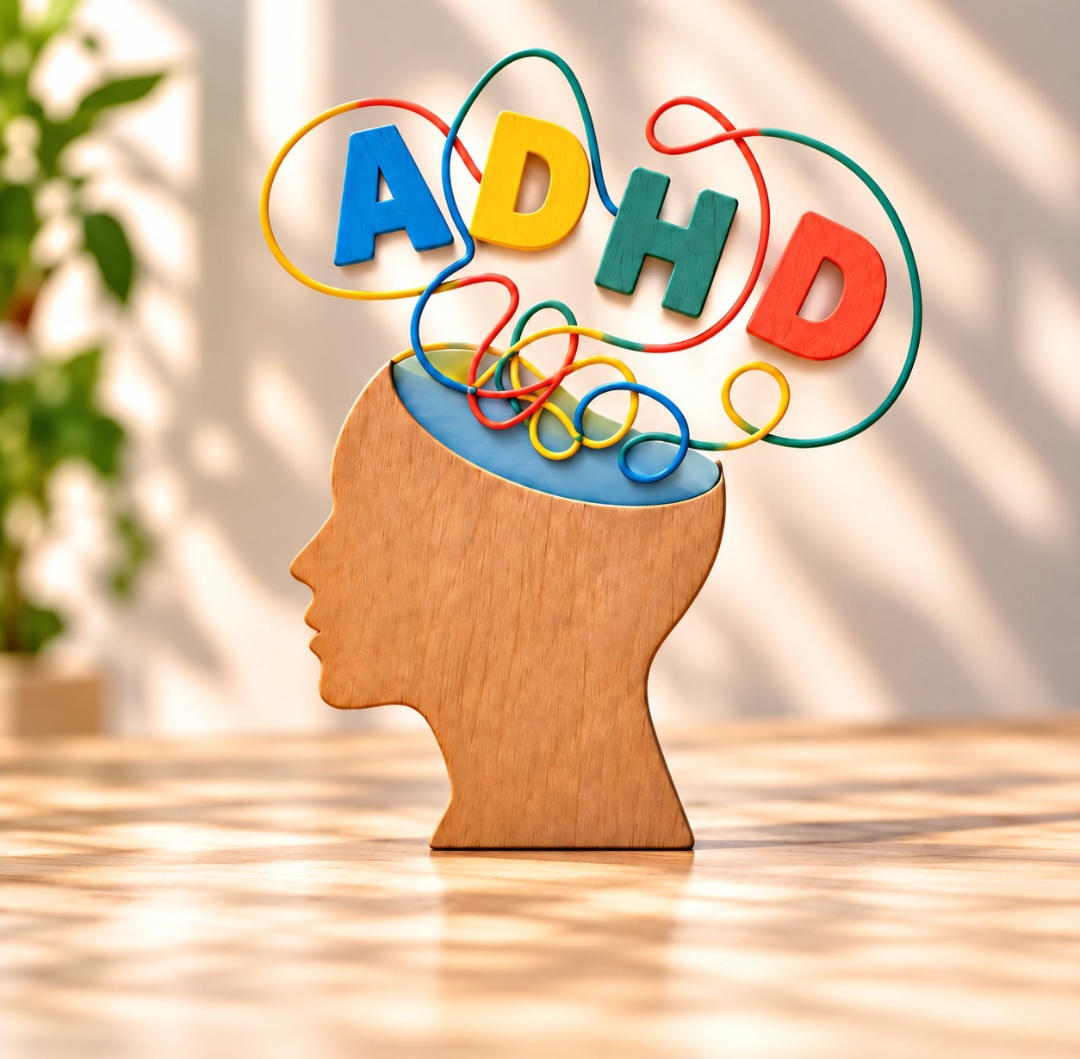
Women and ADHD; Why Might Attention Difficulties Be Identified Late?
"All my life I was told I was scattered", "I always did well at school, but I had to work harder than everyone else", "Only when I became a mother did I realize how hard it was to manage all the tasks".
For many women, the realization that they are living with attention-deficit/hyperactivity disorder (ADHD) comes only in adulthood, sometimes in their thirties, forties or even later. Some grew up without notable academic difficulties, were considered good students and succeeded in building a career and a family. Yet behind their outward functioning, there was sometimes ongoing effort, a sense of overwhelm and difficulty managing everyday demands.
Why can an attention disorder remain unidentified for years, and what is distinctive about how it may manifest in women?
The Quiet Girl Who Raised No Concerns
For many years, the identification of ADHD focused largely on children who displayed hyperactivity, impulsivity and prominent behavioral difficulties. For some girls, however, difficulties manifest mainly as inattention, daydreaming, forgetfulness and difficulty maintaining a train of thought. A girl who does not disrupt lessons, tries to meet expectations and achieves reasonable grades may not raise suspicions of an attention disorder. However, it is important to emphasize that girls can also display hyperactivity and impulsivity, and that there is no single symptom pattern characteristic of all women.
A question for reflection
Was I considered a quiet, well-behaved girl in childhood, even though I struggled to concentrate or follow what was happening around me?
When Success Conceals the Effort
Academic and professional achievements do not rule out ADHD.
Over the years, some women develop effective compensatory strategies: making numerous lists, repeatedly checking tasks, working late and relying on meticulous planning. These strategies may enable success, but sometimes require a significant investment of time and energy. This creates a reality in which others see a capable, successful woman, while she experiences a daily struggle to meet demands.
A question for reflection
Does my success come with a sense of capability, or does it depend on ongoing effort that is difficult for me to sustain?
Social Expectations of Women
Alongside individual characteristics, social expectations may also influence how attention difficulties are identified and interpreted. Many women grow up in an environment that encourages them to be organized, responsible, attentive to the needs of others and able to manage several areas at once. When a woman struggles to meet these expectations, she may interpret the difficulty as irresponsibility or personal failure, rather than consider the possibility of a neurodevelopmental difficulty.
Sometimes those around her also regard forgetfulness or disorganization as personality traits rather than signs that warrant professional evaluation.
A question for reflection
Do I judge myself for functional difficulties that I would treat with greater understanding in another person?
Why Do Difficulties Emerge After Starting a Family?
The amount of responsibility a person is required to carry changes throughout life. For some women, the transition to independent living, starting a family or advancing to a complex professional role reveals difficulties that were manageable in the past. Parenting, for example, requires keeping track of the needs of several people, coping with unexpected changes and coordinating numerous tasks. A woman who managed her personal life well may discover that the methods that helped her in the past are no longer sufficient.
This does not mean that ADHD developed as a result of motherhood. Sometimes the new demands simply make existing difficulties more noticeable.
A question for reflection
Did my difficulties begin at a particular stage in life, or were they present earlier but became more significant as responsibility increased?
When the Difficulty Turns Inward
For some women, living with ADHD is accompanied by self-criticism, guilt and fear of disappointing others. When a woman struggles to meet commitments, she may conclude that she is not trying hard enough, even when she is putting in considerable effort. Over time, repeated experiences of frustration may affect self-image and a sense of capability. Sometimes women seek treatment for anxiety, depression or burnout, and only during the evaluation does the possibility of ongoing attention difficulties also arise.
It is important to distinguish between these conditions, because they may coexist and influence one another.
A question for reflection
Is my self-criticism connected to an ongoing gap between what I expect of myself and what I actually manage to do?
Hormonal Changes and Their Influence on Symptoms
One area attracting research interest is the connection between hormonal changes and manifestations of ADHD in women. Estrogen is involved in neural processes related, among other things, to dopamine activity and cognitive functions. Some women report changes in concentration and functioning at different stages of the menstrual cycle, after childbirth or during perimenopause and menopause. However, research in this field is still developing, and it cannot be concluded that every change in concentration during these periods stems from an attention disorder.
Sometimes the changes are also related to sleep disturbances, physical symptoms or emotional factors.
A question for reflection
Do I recognize periods when my attention difficulties increase, and are they connected to hormonal changes or other changes in my life?
Why Is Diagnosis in Adulthood More Complex?
When a woman seeks an ADHD evaluation at an older age, it can sometimes be difficult to accurately reconstruct the symptoms that appeared in childhood. She may not have old school reports, teachers’ accounts or family members who can describe her early functioning. In addition, years of adaptation and developing compensatory strategies may obscure some of the difficulties. Clinical assessment therefore considers developmental history, recurring patterns throughout life and their impact on different areas of functioning.
A MOXO test may provide additional information about attention performance, but cannot determine on its own whether ADHD is present or explain why the difficulties were not identified earlier.
A question for reflection
What recurring patterns can I identify throughout my life, even if I did not previously know how to connect them?
What Does a Late Diagnosis Mean?
For some women, an ADHD diagnosis in adulthood may bring relief and a sense of understanding. Experiences previously interpreted as laziness, lack of discipline or personal failure may gain a new explanation. Alongside relief, sadness or anger may also emerge over years in which the difficulties were not identified and did not receive appropriate support.
It is important to allow space for the different feelings, without turning the diagnosis into the sole explanation for all life experiences.
A question for reflection
How would the way I relate to myself have changed if I had understood the source of my difficulties earlier?
Understanding the Past and Building What Comes Next
ADHD in women is not necessarily a disorder that appears late. Sometimes it is simply identified late.
The expression of symptoms, compensatory strategies, social expectations and changes throughout life may influence when the difficulties become visible.
Accurate professional identification makes it possible not only to understand the patterns of coping that have developed over the years, but also to develop more suitable ways of managing life, while recognizing personal abilities and strengths.
A question for reflection
Am I willing to reconsider the story I have told myself over the years about my difficulties and also see it through the possibility of an attention disorder that went unidentified?
This article is intended for information and reflection and is not a substitute for individually tailored professional care.
More Articles on ADHD
- ADHD in Adolescence; When Difficulties Change with AgeRead article
- ADHD Is Not Just an Attention Difficulty; What Is Attention-Deficit/Hyperactivity Disorder Really?Read article
- Anxiety or Trauma; Why Can the Symptoms Look Similar to ADHD?Read article
- "He Can When He Wants To": One of the Biggest Myths About Children with ADHDRead article
- ADHD and Anger Outbursts; What Is the Connection Between Attention-Deficit/Hyperactivity Disorder and Emotional Regulation?Read article
- ADHD During Relocation; When Moving to Another Country Meets Difficulties with Organization, Social Life and MotivationRead article
- The MOXO Test; What Does It Measure, What Can We Learn from It, and When Should We Seek a Diagnostic Evaluation?Read article